Categories
CESPE Academy Courses

Process Control for Advanced Pharmaceutical Manufacturing

Course takes place on 23rd and 24th of April 2026 at the Faculty of Pharmaceutical Sciences.

COURSE OVERVIEW

Pharmaceutical manufacturing is undergoing a paradigm shift, evolving from Quality by Design (QbD), where quality is built into the process during development to Quality by Control (QbC), where advanced control strategies and real-time monitoring actively ensure product quality during production. The training addresses the question of how we can keep pharmaceutical processes in optimal manufacturing conditions while ensuring versatility, resilience and quality of end product.

This intensive 1.5-day course, given by experts from Dynamical Systems and Control (DySC) lab, provides a practical and scientifically grounded framework for modern process control and optimization in pharmaceutical manufacturing. Participants will gain hands-on experience using a virtual plant simulation environment, where they will design, test, and evaluate different control strategies in a safe, risk-free setting.

Target Audience:

  • Researchers and operators with no prior experience in process modeling or control.
  • Process engineers, quality professionals, control engineers, and R&D scientists working in pharmaceutical
    manufacturing.
  • Professionals seeking a refresher on process identification and control principles.


MODULE 1: Fundamentals & Classical Control (full Day)


Introduction to Process Control in Pharma
&
Identification at operator level (e.g. first order plus dead time approximation model)
&
Hands-on modelling session (identify FOPDT model of unit operations)
&
PID Control Fundamentals
&
Control structures and PID design
&
Hands-On Simulation Session (Implementing and tuning PID controllers in the virtual plant)


MODULE 2: Advanced Control (half day)

Limitations of PID & Need for Advanced Control
&
Introduction to Model Predictive Control (MPC)
&
Hands-On: Implementing MPC (setting up MPC for the same virtual plant)
&
Moving towards real-world implementation and QbC readiness

COURSE PROGRAMME

A detailed overview of the different modules can be found in the following document.


Registrations are open for this course, please follow the ‘REGISTER HERE‘ link above for further details, including registration fees. If you have any questions please email Mark Gontsarik (mark.gontsarik@ugent.be).

Categories
Equipment Services

SynBioC

Equipment

Microreactor systems

Description                                              

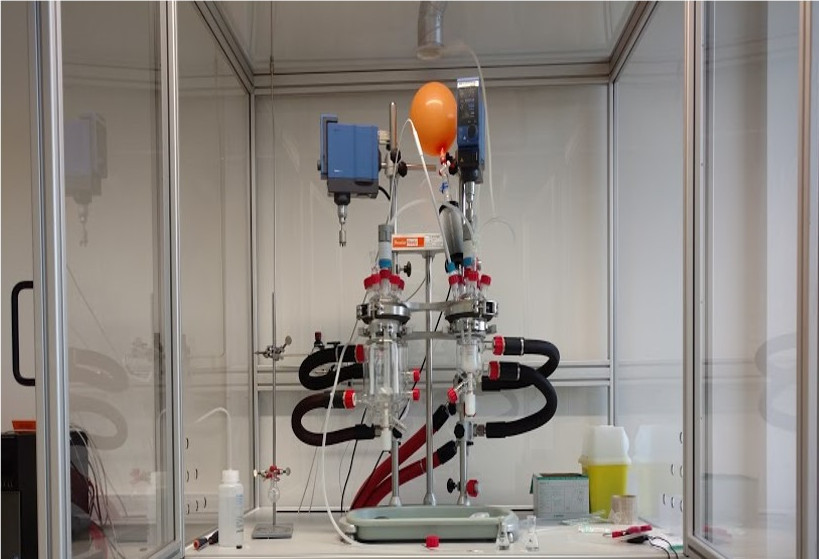
Different microreactors are available at our research group. We use both complete systems and self-made systems by combining one or more pumps with a tubular reactor and/or a microchip. Within our lab, flow reactions with O2, CO2, H2, and CHF3 are possible. In-line work can be done by a Zaiput liquid/liquid separator and in-line analysis by an in-line FTIR (Bruker).

Complete systems

Labtrix® Start (Chemtrix)
Internal volume: 1, 5 or 10 µl depending on the reactor chip used
Temperature range: -15°C to 195°C
Pressures up to 25 bar
Wetted materials: glass, PEEK, PTFE, Techtron

KiloFlow® (Chemtrix)
Internal volume: 13 ml
Temperature range: 10°C to 150°C
Pressures up to 20 bar
Wetted materials: glass, PEEK, ETFE, perfluoroelastomer

X-CubeTM (ThalesNano)
Temperature range: 20°C to 200°C
Pressures up to 150 bar
Wetted material: stainless steel
Compatible with gases (H2, O2, …)
Compatible with catalyst cartridges (Pd/C, Raney Ni, …)

H Cube Mini (ThalesNano)
Temperature range: 20°C to 100°C
Pressure 1 bar to 100 bar
Flow rate 0.3-3 ml/min
Maximum hydrogen production rate 25-30 Nml/min
Water reservoir capacity 100 ml

Vapourtec Easy-MedChem V3
An adjustable packed bed column reactor – ambient to 150°C
A tube reactor assembly – ambient to 150°C
User interface with manual control software
3 V-3 pumps

Africa (Syrris)
Fully automated, flexible and easy-to-use microreactor system
Wide temperature range
Reagent pump module with flow rate range of 2.5-2500 µl/min

Pumps

ReaXus-Model 6010R (Teledyne ISCO)
High performance reciprocating peristaltic pump
Accurate flow rate control up to 10 ml/min
Pressure capability up to 6000 psi (414 bar)

WADose (Flusys)
Compact high-pressure dosing peristaltic pump (dual piston)
Dosing range 0.001-40 ml/min
Viscosity range up to 40 mPa.s
Pressure range atm-400 barg
Pump head material PEEK

FlowSyn Binary Pump Module (Uniqsis)
Peristaltic pump
Flow rates from 5 µl/min up to 10 ml/min
Glass static mixer + Teflon 5 ml coil reactor
10 bar BPR

Intelligent Pump AI-12 (Flom)
Peristaltic pump
Double-plunger reciprocating method
Maximum discharge pressure 5MPa
Range of flow rate setting 0.1-50 ml/min
Pressure limiter upper limit 0-10 MPa

Syringe pumps e.g. Fusion 101 (Chemyx)

Reactors

  • Glass chips: e.g. Glass static reactor 1.6 mL (Uniqsis)
  • PTFE tubing with multiple radii
  • PFA tubing with multiple radii
  • PEEK tubing with multiple radii

Bruker Avance-III 400 MHz NMR Spectrometer equipped with BRUKER 5 mm BBFO 400 MHz Z-gradient high resolution probe

Description

State-of-the-art NMR spectrometer equipped with an observe broadband high resolution probe, fitted with an actively shielded single axis Z-gradient for 5 mm sample diameters and 400 MHz standard-bore or wide-bore magnets. The inner NMR coil can be tuned to observe 19F or any nucleus in the range from 31P to 15N. The outer NMR coil is tuned for either 1H decoupling or observation. The probe is fitted with a 2H lock channel and automatic tuning and matching (ATM).

Signal/Noise

19F sensitivity  ≥250:1  (TFT sample, with 1H decoupling)

31P sensitivity  ≥140:1  (TPP sample)

13C sensitivity  ≥160:1  (ASTM sample)

15N sensitivity  ≥20:1  (90% formamide sample)

1H sensitivity  ≥250:1  (0.1% EB sample, 2ppm noise)

Pulse Widths

19F pulse width  ≤15μs  (TFT sample)

31P pulse width  ≤15μs  (TPP sample)

13C pulse width  ≤10μs  (ASTM sample)

15N pulse width  ≤18μs  (90% formamide sample)

1H pulse width  ≤15μs  (0.1% EB sample)

Lineshape

13C spinning lineshape  ≤0.2/2/4 Hz  (50%/0.55%/0.11%, ASTM)

1H spinning lineshape  ≤0.6/6/12 Hz  (50%/0.55%/0.11%, 1% CHCl3)

Z-gradient

The probe is fitted with an actively shielded single axis Z-gradient.

Maximum gradient strength is 50 gauss/cm

Variable Temperature Range

Variable temperature range is from -150°C to +150°C*

Liquid chromatography – Mass spectrometry

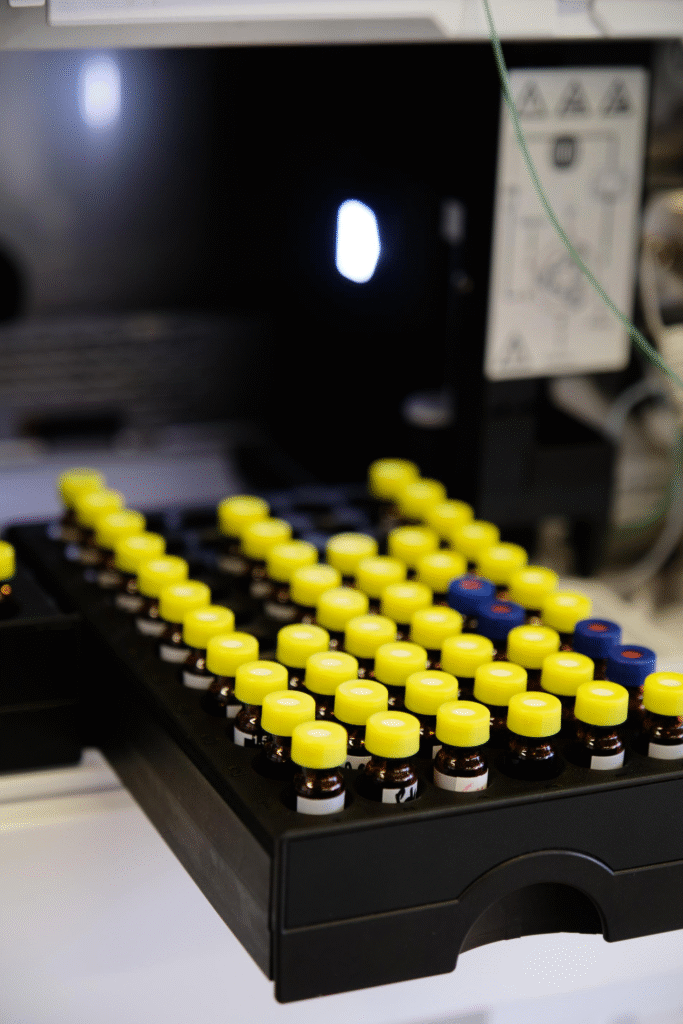
Agilent 1100 LC/MSD SL – Agilent 1200 LC – 1100 Series MSD VL

HPLC : UV detection by DAD

MS : ESI – single quadrupole – electron multiplier

Agilent 1100 Prep LC

HPLC : VWD detection – fraction collector

Agilent 1260 Series

HPLC : UV detection by DAD

MS: ESI – singe quadrupole – electron multiplier

ELSD: Infinity II – Evaporative Light Scattering Detector

Flash chromatography

Chemical separation technique used to purify chemical mixtures.

BUCHI Reveleris X2: Normal phase flash chromatography 

Grace Reveleris: Reversed phase flash chromatography

Shimadzu IRAffinity-1S FTIR Spectrometer

Description

Apparatus to determine IR absorbance/transmittance and to acquire IR spectra.

Thermo Scientific Genesys 180 UV-Vis Spectrometer

Description

Apparatus to determine UV-Vis absorbance/transmittance and to acquire UV-Vis spectra.

CEM Discover Microwave Synthesizer

Description

Apparatus for heating sealed pressure vessels with the power of microwave energy.

Ball Mill Retsch MM400

Description

Apparatus used for chemical synthesis. Alternative for synthesis via batch chemistry. Maximum frequency of 30 Hz.

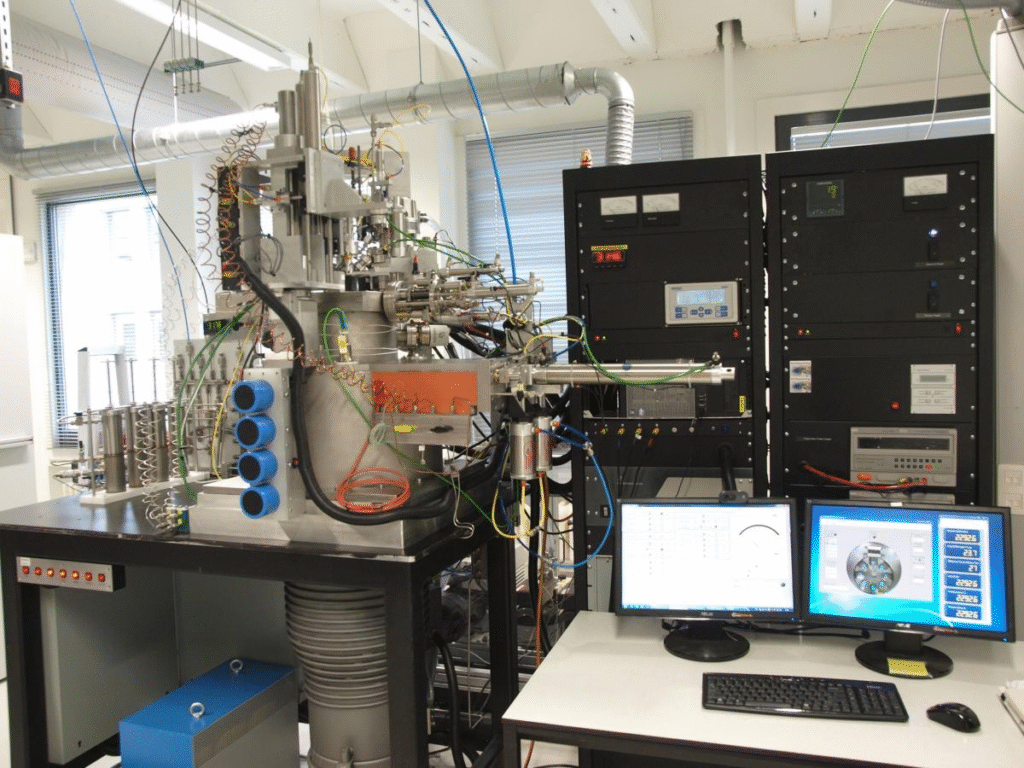
GC-MS Agilent 8890

Description

The Agilent 8890 Plus GC system is coupled to a quadropole mass selective spectrometer 5977B MSD

Gerstel MPS2 autosampler has various introduction techniques: liquid, dynamic headspace, SPME and thermal absorption

GC-MS Agilent 6890 Plus

gcms2
Description

The Agilent 6890 Plus GC system is coupled to a quadropole mass selective spectrometer 5793 MSD

Gerstel CIS-4 PTV injector

GC-FID

Description

The Agilent 6890N GC system is coupled to a flame-ionization detector

Injector: Agilent 7683 Series 

BUCHI Melting Point M-560

Description

Apparatus to determine melting point of solid pure compounds and boiling point of pure liquids.

Harvest Right Pharmaceutical Freeze Dryer

Description

Freeze drying apparatus to remove water from chemical samples.

Parr High Pressure Reactor 4793

Description

Stainless steel high pressure reactor of 100 mL with maximum pressure of 200 bar. Used for chemical reactions with carbon dioxide gas.

Organic Elemental Analysis 2400 Series II CHNS/O Elemental Analyser

Description

One analyser with three modes of operation : CHN, CHNS and Oxygen

Advanced cumbustion design for handling virtually any type of samples

Frontal chromatography for simple , reliable and accurate measurements

Automated weight entry

Analytical detector range (element range (mgs)):

  • C: 0.001 – 3.6
  • H: 0.001 – 1.0
  • S: 0.001 – 2.0
  • O: 0.001 – 2.0
  • N: 0.001 – 6.0

Services

The SynBioC Research Group is equipped to perform several types of analyses on organic compounds:

  • NMR analyses
  • IR analyses
  • UV analyses
  • GC analyses
  • LC analyses
  • MS analyses

For more information regarding prices and technical aspects , please contact Prof C. Stevens , Prof M. D’hooghe or Prof S. Mangelinckx, Prof T. Heugebaert.

Categories
Equipment Service and expertise

Laboratory of Pharmaceutical Process Analytical Technology

Equipment

EquipmentSupplierApplications
RamanRxn 1 spectrometerKaiser Optical systems1. Process monitoring of (innovative) pharmaceutical production processes

2. Fast and non-destructive qualitative and quantitative off-line analysis of pharmaceutical dosage forms (solids, liquids, half solids)

3. Counterfeit analysis

4. Solid-state characterization
Raman microprobeKaiser Optical systems1. Chemical mapping of solid dosage forms: API distribution screening in solid forms, coating thickness analysis, drug migration analysis, …
FT-NIR spectrometer (Antaris II)Thermo Fisher1. Process monitoring of (innovative) pharmaceutical production processes

2. Fast and non-destructive qualitative and quantitative off-line analysis of pharmaceutical dosage forms (solids, liquids, half solids)

3. Counterfeit analysis

4. Solid-state characterization
–  Freeze dryer
–  Spray dryer
–  Fluid bed
–  Tableting
–  Hot-melt extruder
–  Continuous system (Consigma)
Laboratory for Pharmaceutical Technology
In-line Particle Probe IPP 70Parsum®1. Particle Size Analysis during processing
2. Particle Velocity measurements during processing

Service and expertise

The Laboratory of Pharmaceutical Process Analytical Technology offers various services, based on developed expertise:

  • Chemometric data-analysis
  • Collection of Raman and NIR spectra from samples
  • Testing the added value of newly developed process analyzers (sensors) in our available production processes
  • Qualitative and quantitative Raman and NIR spectroscopic analysis of pharmaceutical dosage forms: solids, half solids, liquids (non-destructive)
  • In-line Raman and NIR spectroscopic monitoring of pharmaceutical production processes
  • Raman spectroscopic mapping of pharmaceutical solid dosage forms: API distribution screening in solid forms, coating thickness analysis, drug migration analysis, …
  • In-line measurement of particle size and particle velocity in pharmaceutical processes
  • Optimization of freeze-drying processes
  • Biopharmaceutical analysis

For further information, contact Prof. Thomas De Beer.

Categories
Infrastructure

Laboratory for chemical technology

The Pilot Steam Cracker

LCT disposes of a pilot plant unit for the thermal cracking of hydrocarbons, next to a number of bench-scale units. These experimental set-ups are used to determine the kinetics of the cracking reactions and of coke deposition in both the radiant coil and the transfer line exchanger (TLE). Fouling inhibition in reactor and TLE is also studied. Major advantage of the pilot unit is its extremely flexibility. A wide variety of hydrocarbons, ranging from gaseous feeds to waxes, can be handled. Moreover, the reactor design allows to obtain a broad range of process conditions. The pilot plant also offers the opportunity to industrial groups to test industrially important and/or new feeds, additives, coatings etc. in pilot plant experiments done by LCT personnel.

High-Throughput Intrinsic Kinetics (HTK) Reactor Systems

Two complementary high-throughput kinetics (HTK) set-ups are available, i.e. a high-throughput kinetics screening set-up (HTK-S) and high-throughput kinetics mechanistic investigation set-up (HTK-MI). They are specifically designed to achieve the goals put forward in the information-driven catalyst design methodology, i.e. catalyst screening and mechanistic investigation while providing reliable intrinsic kinetic data for microkinetic model construction. The main goal of the HTK-S set-up is the fast parallel screening of a large variety and, hence, number of catalysts. Both simple and complex reaction networks can be dealt with. This set-up corresponds to the screening step. After the screening stage, a benchmark catalyst is selected, on which an extensive experimental study is performed on HTK-MI complemented by a few additional catalysts for the catalyst descriptor determination. This is depicted as the mechanistic investigation step.

TAP Reactor System for Materials Kinetic Characterization

The Temporal Analysis of Products (TAP) Reactor System is used to characterize the reaction kinetics of chemical conversion over materials or heterogeneous catalysts. Characterizing the relationship between surface composition and kinetic properties enables the rational design of materials based on microkinetic detail from simple reaction steps. The advantage of Temporal Analysis of Products (TAP) comes from the small pulse size (approximately 1014-1016), which is several orders of magnitude smaller than the number of active sites in a typical sample. As a result, from pulse to pulse, the kinetic state of the material can be probed without inducing a significant change. Over a long series of pulses a material can be incrementally manipulated, for example from oxidized to reduced. Observing the evolution of kinetic properties from TAP data can shows how the processes such as bulk oxide transport, surface diffusion, number of active site, site blockage, reaction products and effect of the surface intermediates and products impact the reaction mechanism. This information can be used to better understand deactivation mechanisms or to distinguish why materials of similar composition and preparation perform differently at process conditions.

Emulsion polymerization set-up

Emulsion polymerization can be experimentally conducted at various reactor sizes (up to L scale) to study nanoparticle synthesis, accounting for all length and time scale. Chain length and particle size distributions can be measured upon further analysis.

Vortex reactor technology

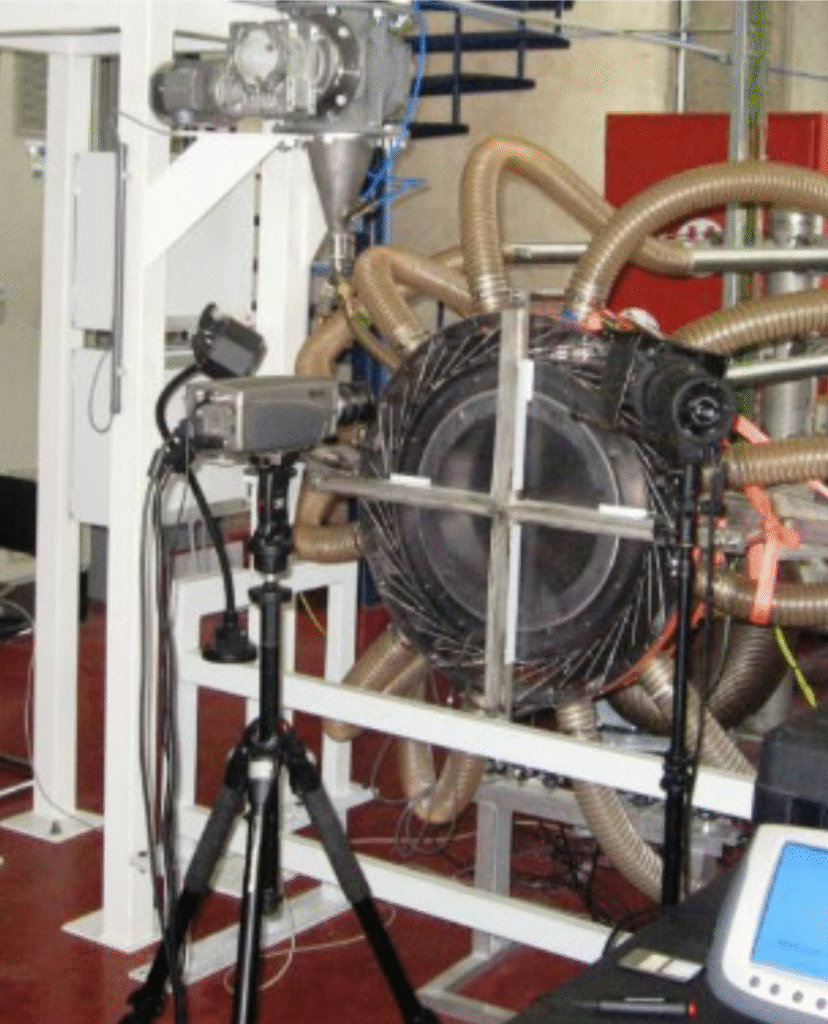
The gas-solid vortex reactor in a static geometry (GSVR−SG) or shirt vortex reactor is a disruptive reactor concept that makes use of a rotating bed.  The unique attributes of the vortex reactor allow it to significantly improve certain processes that suffer from convective heat or mass transfer limitations between phases.  Other advantages may arise from the ability to work with different fluidization agents such as steam or hydrogen.  The high centrifugal acceleration (greater than 30 g’s) generates much higher slip velocities and more intense heat and mass transfer between phases.

Since the GSVR−SG technology is relatively new, the state of the art is still at the level of cold flow assessment analyses, experimentation and modeling, with valuable experimental studies carried out for different applications. 
The LCT has been working on further developing the reactive vortex reactor technology and has absolute freedom to operate.

Categories
Infrastructure

Industrial Catalysis and Adsorption Technology

INCAT has built up a strong expertise in applied chemical analysis within different research domains. We have a variety of analytical instruments, process instrumentation and dedicated engineering equipment.

Equipment

Analytical instruments

GPC

Application: Accurate determination of molecular weights and sizes for a wide range of polymers

Our GPC/SEC System, can determine accurate, absolute molecular weights and sizes, and can be used to analyze a wide range of polymers, regardless of molecular weight range or solvent.

HPLC

Application: Separation and quantitative determination of liquid samples with reversed phase, normal phase and anion exchange chromatography

GC-FID

Application: Separation and quantitative determination of volatile components with gas chromatography

GC-MS

Application: Separation and quantitative determination of volatile components with gas chromatography and mass spectrometry identification

UV-VIS

Application: Quantitative determination of chromophores with wavelenghts of 190-800 nm

AAS

Application: Quantitative determination of metals and minerals with atomic absorption spectroscopy with flame and graphite furnace atomisation

Solid Phase Extraction robot

Application: High-throughput automated SPE fractionation and sample cleanup

Our automated system for positive pressure solid phase extraction (SPE) maximizes throughput by processing up to four samples in parallel. It is the ideal choice for preparative fractionation, concentration and clean-up for all kind of liquid samples

Karl Fischer Analysis

Application: Quantitative determination of the water content in liquid samples

Density meter

Application: Quantitative determination of density and concentrations of liquids

Kjeldahl

Viscosity meters: Spindle and Cone-Plate measurement

Application: Viscometer dedicated for cone-plate measurements adapted for samples in limited quantities and difficult to clean. Viscosities can be measured between –50 °C and 300°C with an unlimited number of speeds between 0.3 and 1500 rpm and a torque range of 0.05 to 30 mNm.

Process and reaction engineering instrumentation

PILODIST VLE 110 system

Application: Determination of vapor pressures of pure liquids and vapour-liquid phase equilibria of mixtures

Our PILODIST VLE 110 system operates under atmospheric, vacuum or at overpressure with a charge volume of 35 mL and temperatures of up to 250°C.

Pilot-scale gas absorber

Application: Absorption of CO2 from a gaseous feedstock at atmospheric pressure

In the pilot scale gas absorption column (height of 4 m), typically a CO2 containing gaseous stream is fed in countercurrent to the liquid phase, which absorbs the CO2. The gas flow rate and its CO2- concentration can be varied, as well as the flow rate of the absorption liquid. The latter can also be cooled. Liquid samples can be taken to investigate the absorption performance and kinetic.

Pilot-scale distillation column

Application: Distillation of a water/methanol mixture at atmospheric pressure

The pilot-scale distillation column is a 6 m high packing column. The column is explosion proof and fully controlled (flow rate of the cooling water, temperature, liquid level, pressure and reflux ratio). Thermocouples measure the temperature at different locations. At these locations, also liquid samples can be taken. These measurements allow to quantify the separation efficiency of the mixture in the column. There is also an in-house built Aspen Dynamics simulation, containing the appropriate controllers to simulate of a full-scale distillation unit.

Pilot-scale Liquid liquid extractor

Application: Extraction of acetone in butyl acetate with water (and vice versa)

In the pulsated packing column (height of 3 m), the butyl acetate/acetone mixture is the dispersed phase and water is the continuous phase. The flow rates of both phases can be varied, as well as the pulsation. The interface level (at the top) is manually controlled. Samples can be taken of each phase in the collector vessels.

Eco cat reactor

Application: High throughput reactor set up to study chemical reactions and screening of catalysts

Pilot-scale high pressure reactor

Application: High Pressure 1 L stainless steel and 3 L Hastelloy C276 reactor

The pilot-scale 3 L reactor is equipped with a catalyst basket and a diptube for sampling and is used for upscaling of (heterogeneously catalyzed) reactions.

Muffle ovens

High Temperature Tube Furnaces

Application: Carbonization of adsorbents

Bench-scale batch reactor (thermostatically controlled) and column setups (atmospheric pressure)

Orbital shakers

Categories
Service and expertise

Department of Organic and Macromolecular Chemistry

Chemical Analysis and Synthesis

The Department of Organic and Macromolecular Chemistry also provides several services in terms of chemical analysis and chemical synthesis.

For more specific information or questions you can contact the different research groups or for more general information you can contact the reception.

Valorisation

For more information about industrial collaborations between research groups dealing with chemistry and companies that are looking for chemical expertise you can contact Chemtech.

Categories
Uncategorized

Centre of Sustainable Chemistry

Reaction and Process Design

  • COILSIM1D: simulation and optimization software for steam cracking processes
  • GCxGC analysis equipment for complex mixtures of feed/reaction products
  • Bench scale units for kinetic experiments
  • Temporal Analysis of Products (TAP) for puls-respons experiments
  • Two high-throughput kinetics set-ups for catalyst testing
  • Pyrolysis reactors for the thermochemical conversion of biomass
  • Microreactor equipment
  • CFD simulation tools
  • Tools for exergetic sustainability and life-cycle assessments

Industrial Biotech

  • Enzyme engineering: specialized software for protein modeling and docking (Yasara Structure)
  • Automated screening platform: high-throughput robots for colony picking and for liquid handling; microplate reader
  • Microbiology/molecular biology: PCR; electrophoresis; electroporation; laminar flow; bioreactors with shaking, T-control and data acquisition software; Bioscope Plug-flow reactor for rapid sampling experiments; Metabolic Flux Analysis Software (MFA); software for DNA and RNA analysis; …
  • Purification/DSP (downstream processing): evaporators; (continuous) centrifuges; lyophilisator; …
  • Product analysis: GC/HPLC with UV-VIS, IR, PAD, ELSD and MS detection
  • Microbial electrochemistry: rotating disc electrode for probing kinetics of anaerobic microbial metabolism; membrane electrolysis materials such as a potensiostat, custom-made Perspex plate-and-frame reactor, ion exchange membranes, iridium oxide coated titanium anodes, variety of cathode materials

Advanced Materials

  • Molecular characterization: structure elucidation with NMR, MALDI-TOF, on-line IR, GC- and LC-MS analysis, chiral HPLC, …
  • Structural characterization: determination of molecular weight and molecular weight distribution of polymers via SEC and 2D LC/SEC; microstructural and crystallographical analysis of powders and thin layers; texture analysis; …
  • Behaviour of solutions via turbidimetry, light scattering, determination of particle size, viscosimetry, …
  • Surface visualization and characterization: measurement of microscopic features and microstructures at nanoscale supported by optical microscopy, SEM, TEM, AFM, IR mapping, XRD, XPS; surface interaction via static and dynamic contact angle measurements; quartz crystal microbalance-coupled ellipsometry
  • Thermal and mechanical analysis: study of thermal behaviour via differential scanning calorimetry (DSC) and thermogravimetric analysis (TGA); study of mechanical behaviour via dynamic mechanical analysis (DMA), rheology and materials testing equipment

The Pilot Steam Cracker

LCT disposes of a pilot plant unit for the thermal cracking of hydrocarbons, next to a number of bench-scale units. These experimental set-ups are used to determine the kinetics of the cracking reactions and of coke deposition in both the radiant coil and the transfer line exchanger (TLE). Fouling inhibition in reactor and TLE is also studied. Major advantage of the pilot unit is its extremely flexibility. A wide variety of hydrocarbons, ranging from gaseous feeds to waxes, can be handled. Moreover, the reactor design allows to obtain a broad range of process conditions. The pilot plant also offers the opportunity to industrial groups to test industrially important and/or new feeds, additives, coatings etc. in pilot plant experiments done by LCT personnel.

Categories
Equipment

Laboratory of General Biochemistry and Physical Pharmacy

Our lab offers services for advanced light microscopy (GLiM), nanomedicine (NanoMedicine Centre) and the standardization of enzymes (F.I.P.). 

Ghent Light Microscopy core facility

The Ghent Light Microscopy (GLiM) CORE at Ghent University is a university-wide core facility clustering expertise with both standard and specialized microscopes to support life science research located in Flanders, Belgium.

Wide-field microscopes

Overview of wide field microscopes present at the expertise centre and there unique features:

Nikon Ti widefield fluorescence microscope (inverted)

Instrument specifications

  • Filter sets (UV to red)
    • DIA/DIC ANALYSER
    • DAPI (Ex. 387/11, Em. 447/60)
    • GFP-B (Ex. 472/30, Em. 520/35)
    • TRITC (Ex. 543/22, Em. 593/40)
    • Cy5 (Ex. 628/40, Em. 692/40)
    • GFP-L (472/30, Em. 488LP)
  • Light sensitive, cooled EM-CCD camera (1000*1000 pixels)
  • Nikon colour CMOS camera
  • Incubator with temperature regulation at the microscope level and CO2 at the cell culture level
  • Fully automatic filter wheels, objectives, XY-Stage, light source, …
  • Perfect Focus System
  • Extended software for recording and visualization of multi-dimensional (X, Y, Z, Lambda, t) images

Additional filter sets (in closet, not installed):

  • BV-2A (Ex. 420/40, Em. 470LP) 
  • TRITC (Ex. 540/25, Em. 540/25) 
  • DAPI-FITC
  • YFP-BP (Ex. 500/20, Em. 535/30)
Leica DM6 B: automated upright fluorescence microscope.

Instrument specifications

  • Moterized z-focus and stage
  • Stage insert for 4 slides
  • White light LED 
  • Metal halide lamp (fluorescence)
  • Filter sets
    • DAPI(Ex. BP 360/40, DM LM400, Em. BP470/40)
    • BLUE (Ex. BP 480/40, DM 505, Em. BP527/30)
    • RHOD (Ex. BP 546/10, DM LP560, Em.  BP585/40)
    • Y5 (Ex. BP620/60, DM 660, Em.  BP700/75)
  • Objective lenses
    • HC PL FLUOTAR 20x/0.50
    • HC PL APO 63x/1.40­0.60 OIL
    • HCX PL APO 40x/1.30 OIL
    • HCX PL APO 100x/1.40­0.70 OIL
  • Black/White CCD camera with NIR mode (Leica DFC365 FX)
    • max 21 fps
    • 1392×1040 pixels
  • LAS X software
Lionheart™ FX Automated Microscope 

The lionheart FX is an automated microscope that allows brightfield, color brightfield and fluorescence widefield imaging. The microscope is optimized for automated image acquisition over time and contains an incubator for temperature control. Automated image pre-processing optimizes images for downstream analysis, from cell counting to characterization of subcellular details

  • Sampleholder
    • four 35 mm round dishes
    • multiwell plates
    • 2-position slide holder
  • Autofocus: Image based and laser based
  • Environmental control cover: For temperature control to 40 °C and “darkroom” fluorescence, incl. Humidity control chamber
  • Objectives
    • 20x Objective, Olympus Plan Apochromat, NA 0.4, WD 1.2
    • 2.5x (2.75x eff), Zeiss Plan Fluorite, NA 0.12, WD 2.5
    • High contrast brightfield kit, 4x Objective included
  • Filter cubes & LEDs
    • DAPI filter cube: Ex. 377/50 Em. 447/60 mirror 409
      365 nm LED cube
    • GFP filter cube: Ex. 469/35 Em. 525/39 mirror 497
      465 nm LED cub
    • Texas Red filter cube: Ex. 586/15 Em. 647/57 mirror 605
      590 nm LED cube
    • CY5 Filter cube: Ex. 628/40 Em. 685/40 mirror 660
      623nm LED cube
  • Software GEN5IPRIME (Gen5 Image Prime)

Nikon C2 microscope

Instrument specifications

Microscope Stand: Ti2-E Inverted Microscope

  • motorized stage
  • Perfect Focus System

Objectives

  • 20X: CFI Plan Apochromat Lambda D 20X, NA 0.8, WD 0.8, AIR (MRD70270)
  • 40X: CFI Plan Fluor 40X, NA 0.75, WD 0.66, AIR (MRH00405)
  • 40X: CFI Plan Apochromat Lambda D 40X, NA 0.95, WD 0.21 (MRD70470)
  • 60X WI: CFI Plan Apo VC 60XC WI, NA 1.2, WD 0.31-0.28 (MRD07602)
  • 60X Oil: CFI Plan Apochromat Lambda D 60X Oil, NA 1.42, WD 0.15 (MRD71670)
  • 100X oil: CFI HP Plan Apo VC 100X Oil NA 1.4, WD 0.13 (MRD01902)

Filter cubes

  • DAPI
  • FITC
  • TRITC

Camera

NanoMedicine Centre

The NanoMedicine Centre provides end-to-end solutions for the formulation of promising bio-therapeutics into nanoparticles. 

Services

  • Consultation on formulation and delivery of bio-therapeutics
  • Formulation of bio-therapeutics in state-of-the art lipid nanoparticles
  • In-dept characterization of nanomedicines

Center for Pharmaceutical Enzyme Standards

Our lab hosts the FIP Centre for Pharmaceutical Enzyme Standards which has a coordination function in organizing collaborative enzyme assays between academic, industrial and national pharmaceutical control laboratories and in distributing FIP enzyme standards all over the world.

Categories
Services

Laboratory of Pharmaceutical Biotechnology

DNA-fingerprinting

DNA analysis

The Laboratory of Pharmaceutical Biotechnology performs human identification using DNA profiling techniques, mainly for the Department of Justice in Belgium. The laboratory is recognized by the Department of Justice as a forensic DNA laboratory in criminal cases and has a BELAC accreditation since September 15th, 1996.

DNA profiling can be very useful not only in forensic casework but also in paternity testing.

By combination of short tandem repeat loci (STR) in multiplex polymerase chain reactions (PCR), individuals can be identified with very high levels of certainty. Using PCR technology, profiles (and thus identification) can be obtained of very minute and old, badly stored samples.

A DNA profile can be obtained from almost any kind of biological material (e.g. blood(stains), saliva(stains), sperm(stains), skin debris, hair, biological tissues, bones, teeth, …).

In our laboratory a total of 19 STR loci can be analyzed including the 12 ESS loci (the European Set of Standard loci: D3S1358, vWA, FGA, TH01, D21S11, D8S1179, D18S51, D10S1248, D1S1656, D12S391, D2S441 and D22S1045). The remaining 7 STR loci are TPOX, D16S539, D13S317, D5S818, D7S820, SE33 and CD-4. In addition, sex determination can also be performed by analyzing the amelogenin locus on the X- and Y-chromosome. All STR loci are analyzed on an ABI3130xL and/or ABI3500xL genetic analyzer.

Besides the commercially available kits we also created 2 multiplexes of respectively 15 and 9 STR loci in our laboratory. Those 2 multiplexes have 4 STR loci in common, what gives an extra control on the obtained profiles. These multiplexes are extensions of our original multiplex described and published in 1998 in the scientific journal Electrophoresis. The great sensitivity and specificity of this multiplex (which is better than the available commercial kits) was presented on the Second European Symposium on Human Identification in June 1998 in Innsbruck (DNA typing of fingerprints on skin debris: Sensitivity of Capillary Electrophoresis in forensic applications using multiplex PCR).

In special and very urgent cases, DNA identification can be performed within 24 hours after receipt of the samples (max. 2-3 samples). The regular cases are performed in max. 1 month (in fact, in 16 calendar days on average).

A part of the analysis is automated using liquid handlers, avoiding human errors in this way. There is one liquid handler for pre-PCR set-up; a second one is used for processing post-PCR samples.

Besides autosomal STR analysis, we also perform Y-STR analysis. We created a multiplex of 8 STR loci: DYS 19, DYS385a/b, DYS 389I, DYS 389II, DYS390, DYS391, DYS392 and DYS393. This way the minimal haplotype is determined. A commercial kit containing 3 extra loci (DYS437, DYS438 and DYS439) besides the 8 STR mentioned above is also used.

Our lab can also perform analysis of mitochondrial DNA (mtDNA), specifically on samples where nuclear typing has failed or cannot be performed such as hair without a root.

A P.A.L.M. microdissection laser microscope is available in the laboratory. Using the laser microdissection technique, individual cells can be isolated very specifically. Sperms cells, for example, can be isolated from post coital samples. Our laboratory has already published several scientific articles on this subject in a.o. “International Journal Of Legal Medicine”.

DNA research

Besides the routine DNA typing for the Department of Justice, our lab performs research in the field of DNA analysis in order to optimize and improve the procedures. This research includes:

  • optimisation and expansion of the use of P.A.L.M. microlaser system in forensic cases
  • optimisation of DNA extraction
  • statistical interpretation of the data
Scientific articles

The publications produced by our laboratory in various scientific journals can be consulted using the following links:

Categories
Infrastructure

Centre for Polymer and Material Technologies – CPMT

Polymer processing machines

  • Hercules funding type 1 ‘Flaminco’: co-extrusion and lamination equipment for integration of functional components in advanced multilayer materials.
  • 3 injection machines (Engel 80T, Engel 28T, Demag 80T)
  • 2 single screw extruders 30mm Labtech
  • 1 single screw extruder 20mm Labtech
  • 1 single screw extruder 30mm Brabender
  • 3 single screw extruders19mm Brabender
  • 1 single screw extruder 19mm Haake
  • 1 single screw extruder Axson compounder
  • 2 twin screw extruders (Coperion 18D & 1 reactive extruder)
  • 1 conical twin screw compounder MAS
  • mini-compounder (Haake)
  • extrusion blow moulder Bekum
  • 2 thermoset presses
  • extrusion plate die 150mm (adjustable thickness 0,1mmà2mm)
  • extrusion blow film die diameter 150mm
  • extrusion blow moulding bottle 1L
  • thermoforming mould for packaging applications
  • injection moulds for research (ISO 527 -2, several different products,…)
  • co-extrusion 2 layer plate die 150 mm
  • collaborative equipment of other FEA research groups
  • co-extrusion plate die 500 mm (1/3/5 layers) and co-extrusion blow film die (1/2/3 layers)
  • plate & foil co-extrusion unit equipped with 3 single screw extruders
  • filament production Unit
  • different types of feeding systems (gravimetric, volumetric, powder,…)

Characterization equipment

  • tensile/flexural testing: dynamometers up to 5 kN (including heating chamber), different clamps for dumbbells, films and filaments and clip-on extensometers
  • impact testing: Charpy up to 15 J
  • peel tester
  • softening temperature: HDT-VICAT
  • rheology: MFI
  • ageing: weatherometer
  • thermal properties:DSC-TGA-STA
  • identification: FTIR
  • thermal conductivitiy: Hot Disk TPS 2500s
  • table top SEM Phenom G1
  • kyence (polarized) microscopy
  • microtome Leica RM2245
  • IR camera

Prototyping tools

We have several machines at your disposal such as:

  • 3D BioScaffolder
  • 4 FDM based & modified machines for research
  • 2 new printing head methods
  • 3D printers: Objet30Pro, Dimension SST 1200es
  • Several low cost printers: Felix, Ultimaker, Velleman Vertex,…
  • BRM lasercutter and engraver
  • Schluechl vacuum casting application
  • milling machines: RivaCNC 2400 router, ISEL ICP 4030 3 axis milling machine
  • thermoforming for shell prototypes and small series
  • manual prototyping tools and materials
  • tools & equipment for AM extrusion based wire production
  • joined equipment with project partners (SLA, SLS, SLM, FDM, EBM, …)

Categories
News

The Nucleus: hub for innovation and impact

With the opening scheduled for 31 December 2025, The Nucleus is on its way to becoming a vibrant hub for groundbreaking R&D and sustainable innovation at Tech Lane Ghent Science Park. But is more than just a workspace—it is a community. With state-of-the-art facilities, including event spaces, catering services, and versatile meeting rooms.

As a key tenant, CESPE will occupy a significant part of the facility – an investment that underlines the ambition to position the Ghent region as a global hotspot for manufacturing innovation in the (bio)pharma sector.

This vision is made possible by the strength of the ecosystem within Tech Lane Ghent Science Park: a unique combination of academic research, industrial leadership and technological excellence. With direct connections to research institutions, e.g. VIB, imec, and international companies, e.g. J&J, Legend Biotech, Sanofi. This is the place to be for opportunity, growth, innovation and connection.

From this new base, CESPE will also continue to support talent development through the CESPE Academy, which offers a wide range of training programs.

Stay tuned as opening day approaches: The Nucleus is more than a building; it is a catalyst for the future!

Categories
Uncategorized

Register your interest to receive updates on upcoming course(s)


    Categories
    News

    EU Biotech Campus and CESPE Launch Strategic Collaboration to Strengthen Biotech and Biopharma Training

    Ghent-Gosselies, May 27, 2025 – The EU Biotech Campus and CESPE (Centre of Excellence for Sustainable Pharmaceutical Engineering and Manufacturing) are proud to announce a new strategic partnership. This collaboration is rooted in our shared ambition to equip the biotech & biopharmaceutical work force with future-proof skills and raise awareness about the importance of talent development in the life sciences sector.

    Together, we will engage in joint communication efforts to highlight key challenges and opportunities in biotech and pharmaceutical training, and to connect industry stakeholders with relevant learning pathways.

    This partnership with CESPE is perfectly aligned with our mission to create the most dynamic and inclusive biotech training ecosystem in Belgium and in Europe. By joining forces, we are amplifying our impact and inspiring the next generation of talent.” Sabrina Ena, CEO of the EU Biotech Campus

    “We are delighted to embark on this partnership with EU Biotech Campus. It is a powerful step towards a future where talent and innovation are central. This partnership plays a crucial role in nurturing talent and encouraging continuous innovation that reflects the spirit of Belgium’s thriving (bio)pharma ecosystem.” Christoph Portier, General Manager of CESPE

    This marks the beginning of a strategic dialogue between two institutions committed to supporting the growth of biotech and pharmaceutical ecosystems through knowledge-sharing and training.

    Stay tuned for joint initiatives that will spotlight skills development, innovation, and collaboration in life sciences.

    About EU Biotech Campus

    EU Biotech Campus is a training hub based in the Biopark in Gosselies, Charleroi (Belgium) — in the heart of the Wallonia Health Tech Valley. Opening in end 2025, the 5,500 m² facility will offer state-of-the-art spaces and programs to develop talent in the biotechnology, biopharmaceutical and health sectors. As a multi-operator and innovation-driven ecosystem, EU Biotech Campus offers a unique environment where immersive, state-of-the-art training programs meet the real-world needs of companies and learners alike. Our approach combines hands-on learning, advanced technology exposure, and interdisciplinary knowledge exchange with training programs focusing on biomanufacturing processes, digital transition, advanced therapies, soft skills, and STEM awareness, equipping participants with the future-proof competencies needed to thrive in the life sciences industry.

    For more information, visit EU Biotech Campus website. For more information, visit the EU Biotech Campus website www.biotechcampus.eu or follow us on LinkedIn https://www.linkedin.com/company/eubiotechcampus/

    About UGent-CESPE

    Ghent University (UGent) is a top 100 university and one of the largest Belgian universities in the heart of Europe, renowned for its national and international educational, scientific and industrial cooperation. UGent TechTransfer and the platforms such as CESPE, support researchers in transferring groundbreaking science to bring innovations to the market.

    Through the multidisciplinary approach and collaboration with both academic and industrial partners, CESPE contributes to the development of innovative, sustainable and flexible production processes for the medicines of the future.

    Next to its research activities, one of the core values of CESPE is providing talent & skills for the (bio)pharmaceutical industry. CESPE wants to achieve this by bringing together the broad expertise of its diverse academic and industrial members. Over the years, each of these members built extensive knowledge, through both academic research or industrial collaborations. Therefore, CESPE actively promotes knowledge sharing across the (bio)pharmaceutical value chain. This commitment, alongside the demand from the (bio)pharmaceutical industry, led to the creation of the CESPE Academy, which offers a wide range of basic and specialized courses tailored to both industrial and academic professionals.

    At the end of this year, CESPE will relocate to ‘The Nucleus’, the new landmark building at Tech Lane Ghent Science Park. This strategic move places CESPE and the Academy at the heart of the pharmaceutical ecosystem and increases its proximity to leading research institutes and international companies. The new location provides a unique environment that fosters collaboration, encourages innovation and expands opportunities for advanced training.

    For more information, visit CESPE website or follow us on LinkedIn https://www.linkedin.com/company/cespe

    Press contact  EU BIOTECH Campus

    Wilmot Corentin

    +32 497 32 47 58

    corentin.wilmot@biotechcampus.eu

    Press contact  CESPE

    Mark Gontsarik

    +32 9 264 81 18

    mark.gontsarik@ugent.be

    Categories
    News

    CESPE Conference 2025: Registration Now Open

    We are pleased to announce that registrations for our fourth edition of the annual CESPE conference on ‘Scaling sustainable (Bio)Pharmaceutical Manufacturing’ have been opened.

    Join us: 📅 October 22nd, 2025 | 📍 RodeBol Events, Ghent, Belgium

    Registrations and payments can be made through our Congrezzo platform.

    For registrations before September 15th 2025, the Early Bird attendance fees are €300.-/€400.- for industry (CESPE-member/non-member) and €75.-/€125.- for academic (CESPE-member/non-member) participants. The Early Bird fee for participants from governmental or non-profit organizations is €125.-.

    For the networking dinner, a supplement of €75 is charged.

    The deadline for registration is October 20th.

    Information on sponsorships and exhibition booths can be found here.

    For general questions considering the conference and CESPE, feel free to contact Dr. Christoph Portier (Christoph.Portier@UGent.be) or Dr. Mark Gontsarik (Mark.Gontsarik@UGent.be).

    Categories
    Industrial members

    MicroTechniX

    Microtechnix is a Belgian scale-up founded in 2013 by current CEO Wouter Christiaens. We deliver advanced solutions for microbiology quality control (QC) in the pharmaceutical industry. Headquartered in Belgium, Microtechnix leverages decades of combined expertise in the pharmaceutical sector, imaging and automation, and microbiology QC labs. 

    We aim to transform microbiology QC by integrating digitization, automation, artificial intelligence, and data integrity solutions into the heart of pharmaceutical QC laboratories. Our mission is to empower QC labs with tools that deliver precision, scalability, and reproducibility, while meeting the stringent regulatory standards of the pharmaceutical industry. Through collaboration, technological excellence, and customer-centric service, we are the partner of choice for pharmaceutical and biotech companies globally. 

    Digitize & automate Microbiology QC | Meet EMMA 

    EMMA, introduced in 2024, is designed to digitize and automate pharmaceutical microbiology QC. Our solution offers exceptional value for labs by streamlining workflows, improving data integrity, and reducing human error. 

    Why EMMA?

    1. Digitization & Data Integrity ensuring Compliance
    2. Benchtop, Modular, and Scalable Design
    3. Cost-Efficient Endpoint Reading
    4. Industry-First: Petri dish imaging with the Lid On
    5. SWAP Model for Maximum Uptime
    6. Full Compliance with 21 CFR Part 11 and EU Annex 11
    7. Positive/Negative Focus to reduce validation burden

    Shaping the Future of Microbiology QC 

    As we continue to innovate and expand, Microtechnix invites industry stakeholders, academic partners, and prospective customers to join us in redefining the standards of microbiology QC. Together, we can build a future where pharmaceutical labs operate with greater efficiency, precision, and reproducibility. 

    For more information about Microtechnix, visit our website or connect with us directly. Let’s shape the future of microbiology QC together. 

    OTHER INDUSTRIAL MEMBERS

    Categories
    Industrial members

    SwiftPharma

    Field of Expertise:
    Sustainable Protein Production

    SwiftPharma is a biotechnology pioneer specializing in CDMO services, driving innovation in the development and production of animal-free proteins. By addressing market dynamics and customer needs, the company delivers cutting-edge solutions that create meaningful impact in the present and pave the way for a sustainable future.

    At the core of SwiftPharma’s operations is the proprietary HyperXpress® bioplatform, which leverages plants as mini-bioreactors. This technology enables the rapid, scalable, and precise production of low-cost proteins. Complemented by a unique molecular toolbox and flexible infrastructure, SwiftPharma produces a diverse portfolio of protein classes, simplifying processes and accelerating development timelines.

    The company is committed to advancing biomanufacturing through continuous flow operations, ensuring that residual biomass is utilized to promote the bioeconomy. By integrating sustainable practices, SwiftPharma maximizes the value of its processes, yielding byproducts such as biochar, syngas, cellulose nanocrystals, and a range of other high-value products. These efforts enhance process economics while contributing to circular bioeconomic initiatives.

    SwiftPharma’s mission is to enhance lives through innovative biodesign, working with forward-thinking partners to transform the future of synthetic biology and redefine the limits of what is possible in sustainable manufacturing.

    OTHER INDUSTRIAL MEMBERS

    Categories
    Industrial members

    Cilyx

    Field of Expertise:
    Design and manufacturing of turnkey production equipment

    Cilyx is a Belgian company that specializes in the design and manufacturing of turnkey production machines and equipment for the life sciences industry.

    Cilyx has developed different solutions for the life sciences sectors, in particular pharmaceutics and biotech. From lab to large scale production, a full range of machines and equipment are qualified and in use worldwide in different production plants.

    Syringes & Vials

    Handling, transport, and serialization are all essential steps in the processing of pre-filled vials and syringes, which are used in the manufacture of medicines such as vaccines. Cilyx offers a wide range of state-of-the-art solutions to improve productivity, reliability, and traceability all along your production line.

    Bio process automation

    Cilyx specializes in the automation of bio-productions that use single-use technologies and offers a coherent and optimized set of equipment that is dedicated to the management of cell cultures in sterile production environments. Sterile filtration of vaccines and parenteral drugs before the filling step is an important requirement in terms of good manufacturing practices in the pharmaceutical sector. Filter-integrity tests before and after production, sterility assurance and production data integrity are at the heart of the features of our automated AFS final filtration system. The highly adaptable AFS interfaces with the most common filter-integrity testing equipment and the vast majority of sterile filters on the market.

    Extrusion

    Extrusion is an ideal manufacturing technique for preparing several types of dosage forms and drug delivery systems. It offers numerous advantages: the absence of solvents, few processing steps, continuous operation, and the possibility of a solid formulation via controlled and improved diffusion, etc. The extruder is usually combined with different types of downstream supplementary equipment, in order to obtain extrusion-based production lines that are capable of manufacturing a variety of solid dosage forms (pellets, tablets, etc.).

    OTHER INDUSTRIAL MEMBERS

    Categories
    Industrial members

    PROCEPT

    Field of Expertise:
    (spray)drying, agglomeration, coating, and melting

    PROCEPT, established in 1994, specializes in small-scale particle processing equipment for R&D and GMP applications. They offer innovative solutions in drying, agglomeration, coating, and melting, catering to the pharmaceutical, biotech, fine chemicals, nutraceuticals, and food industries. PROCEPT collaborates with its sister company XEDEV, providing comprehensive formulation, process development, and scale-up services. Known for their expertise in spray drying, PROCEPT emphasizes strong engineering and advanced technology to ensure efficient and effective particle engineering processes.

    Categories
    CESPE Academy Courses

    Sustainability and Life Cycle Assessment: From Theory to Practical Applications in Pharma

    The last iteration of this course took place from 7th to 9th of May 2025 at the Faculty of Pharmaceutical Sciences, with a new iteration is on the way in 2026!

    COURSE OVERVIEW

    The Sustainable Systems Engineering (STEN) group offers a comprehensive training programme in Sustainability and Life Cycle Assessment (LCA), with a focus on the pharmaceutical industry. The programme consists of three modules: foundational concepts, practical skills, and industry-specific applications.

    The foundational module covers principles of sustainability assessment and the LCA methodology. The practical module provides hands-on experience with LCA software, while the advanced module focuses on applying LCA in the pharmaceutical sector, including case studies and modeling challenges. Through lectures, case studies, and interactive sessions, participants gain essential knowledge and skills to perform sustainability assessments, with an emphasis on practical applications and critical thinking about sustainability in the pharmaceutical field. Moreover, practical expertise in the LCA process empowers decision-makers to fully comprehend the insights derived from the analysis, enabling them to make more informed and sustainable choices.


    Course has a 3-day programme, split into 3 modules:

    Module 1: Theoretical framework of Life Cycle Assessment (1 day)
    Module 2: Practical case studies (1 day)
    Module 3: Advanced module on LCA in pharma sector (1 day)

    MODULE 1: Theoretical framework of Life Cycle Assessment

    The following will be addressed:

    Introduction to Sustainability and Life Cycle Thinking

    Integrating environmental, social, and economic aspects: LCSA and S-LCA

    Principles and framework of Life Cycle Assessment (ISO 14040 series)

    Goal and Scope in LCA, Life Cycle Inventory, Life Cycle Assessment, and Interpretation

    MODULE 2: Practical case studies

    The following will be addressed:

    LCA software tools

    Introduction to specialized software: OpenLCA

    Use and explanation of the different databases

    Practical case studies in OpenLCA

    Analyzing and interpreting results

    MODULE 3: Advanced module on LCA in pharma sector

    The following will be addressed:

    Green Chemistry and process level assessment metrics

    Conducting LCA in pharma sector
    LCA tailored to pharmaceuticals
    Challenges (data collection, methodological choices, accounting for ecotoxicity, etc.)
    Concrete case studies

    Beyond LCA of classical drug products & environmental sustainability assessment


    COURSE PROGRAMME

    An overview of the different modules can be found in the following document.


    Registrations are open for this course, please follow the ‘REGISTER HERE’ link above. If you have any questions please email Mark Gontsarik (mark.gontsarik@ugent.be).

    Categories
    CESPE Academy Courses

    Towards Continuous Lyophilization: from Formulation to In-Line Analysis

    COURSE OVERVIEW

    Towards Continuous Lyophilization course provides a comprehensive introduction to pharmaceutical freeze-drying through an engaging mix of theoretical and hands-on training.
    This course equips trainees with a solid understanding of the essential principles, covering the entire process from starting materials to the finished product.
    This includes:

    • formulation aspects
    • getting to know the equipment
    • learning to understand the first-principles of lyophilization
      • including both heat and mass transfer mechanisms during freeze-drying

    After that,  the most important PAT tools which are commonly used in the field will be covered. Additionally, a novel continuous freeze-drying technology will be explored in detail. Finally, tour of the lab will be provided, along with interactive sessions on modeling and data analysis.

    By the end of the course, participants will have a solid understanding of the key principles and processes involved in pharmaceutical freeze-drying. They will gain practical knowledge to design and optimize freeze-drying processes, select appropriate PAT tools, and troubleshoot common issues.


    Theoretical

    Introduction to Lyophilization

    • Fundamentals of freeze-drying
    • Detailed overview of the freeze-drying process
    • Equipment and components used in freeze-drying

    Lyophilization Formulations

    • Purpose and composition of freeze-drying formulations
    • Critical properties of freeze-dried materials
    • Characterization methods for lyophilized products

    Modeling the Freeze-Drying Process

    • Introduction to modeling
    • Modeling of freeze-drying and applications
    • Design space for freeze-drying

    Process Analytical Technology (PAT) in Freeze-Drying

    • Importance of PAT in freeze-drying
    • Key PAT tools and their application

    Continuous Freeze-Drying

    • Advantages and innovations of continuous freeze-drying
    • Limitations of traditional batch freeze-drying

    Practical

    Tour of the CESPE Freeze-Drying Lab

    • Batch freeze-dryers
    • Continuous freeze-dryers
    • Sample characterization lab

    Interactive Modelling Session

    • Hands-on experience in constructing a design space for freeze-drying

    Data Analysis Workshop

    • Interpretation and analysis of common freeze-drying data

    COURSE PROGRAMME

    A detailed overview of the programme can be found in the following document.


    If you are interested in taking this course, please email Mark Gontsarik (mark.gontsarik@ugent.be).

    Categories
    CESPE Academy Courses

    Efficient Data Processing Using Python

    COURSE OVERVIEW

    The Efficient Data Processing training is a hands-on course designed to help participants accelerate their data workflows. Processing large, complex datasets often takes significantly more time than data collection, but this course demonstrates how Python can streamline these tasks for faster analysis and interpretation. This course will be given by experts from elegent, a spin-off company from Ghent University offering modelling services for the pharmaceutical and food industries. 

    Through case studies focused on pharmaceutical R&D manufacturing, participants will learn to clean and transform data using Python modules like numpy, pandas, and scikit-learn, along with visualization tools such as matplotlib, seaborn, and plotly. The training integrates theoretical background with practical application, making it especially relevant for scientists and academics in R&D.

    By eliminating repetitive tasks, optimizing workflows, and enabling visual analysis of experiments, this course equips participants with tools to enhance efficiency in data processing.


    COURSE PROGRAMME

    A detailed overview of the different modules can be found in the following document.


    Registrations are open for this course, please follow the ‘REGISTER HERE’ link above. If you have any questions please email Mark Gontsarik (mark.gontsarik@ugent.be).

    Categories
    News

    PHARMECO is officially launched and set to trigger a green revolution in the manufacture of medicines

    This image has an empty alt attribute; its file name is Picture1-2.png

    We are thrilled to announce the official launch of the ambitious PHARMECO project, co-funded by the Innovative Health Initiative Joint Undertaking (IHI JU). This groundbreaking initiative aims to transform pharmaceutical industry to more sustainable pharmaceutical manufacturing practices by integrating  environmentally-friendlier technologies, improved processes and standardized sustainability assessment methods.

    PHARMECO will address the production of small molecules, tides, biologics, and medical devices & technologies, with a key focus on:

    • Sustainable-by-Design (SSbD) platforms for early-stage pharmaceutical development
    • Green processes for industrial-scale manufacturing and decontamination
    • Advanced digital tools for sustainability assessment and decision-making

    CESPE is excited to lead this alliance of 31 esteemed international partners, together with Sanofi as industry project lead:

    CESPE’s focus on sustainable innovation in drug manufacturing positions it as the ideal coordinator for this groundbreaking six-year project, guiding partners toward ambitious sustainability goals.
    Seven Ghent University research groups, all CESPE members, will be actively involved across all PHARMECO workstreams:

    The Sustainable Systems Engineering group (STEN) (Prof. Jo Dewulf, Lieselot Boone) will lead the workstream on sustainable design and evaluation frameworks for pharmaceuticals, collaborating closely with Johnson & Johnson and Sanofi. Supported by Ghent University’s Epidemiology of Chronic Diseases unit (Prof. Delphine De Smedt), the Biovism Lab (Prof. Jan Verwaeren), the Bionamix Lab (Prof. Paul Van Liedekerke), and several international partners, STEN will lead environmental impact assessments for innovative manufacturing technologies , the set-up of holistic sustainability evaluations, and development of models and digital tools for predictive sustainability, with industry input to enhance scalability and precision.

    The Synthesis, Bioresources, and Bio-organic Chemistry group (SynBioC) (Prof. Chris Stevens) will contribute to the workstream on sustainable chemical synthesis. SynBioC’s activities will focus on creating intermediates from bio-renewable sources, using non-precious metal catalysts, utilizing high-throughput experimentation tools, which will contribute to the project’s ambition to implement cleaner, more economical chemical synthesis processes in industry practice.

    The Pharmaceutical Engineering Research Group (Prof. Ashish Kumar) and the Laboratory of Pharmaceutical Process Analytical Technology (Prof. Thomas De Beer) will both contribute to the workstream focused on intensification of biomanufacturing processes. Their efforts will centre on implementing advanced model-based strategies for process control and optimizing production processes. These activities will support the workstream’s objective to incorporate scalable, cleaner, and resource-efficient biomanufacturing methods, practices, and unit operations into industry standards.

    Stay tuned for updates as we work on adopting more  sustainable practices in pharmaceutical manufacturing!

    This project is supported by the Innovative Health Initiative Joint Undertaking (IHI JU) and its members under grant agreement No 101165889.

    Categories
    News

    The Nucleus reaches its highest point!

    We are pleased to announce a significant milestone in the development of The Nucleus, the future home of the CESPE Innovation Accelerator, located at the Tech Lane Ghent Science Park. The structural works have reached their highest point, marking a pivotal step in this landmark project.

    In keeping with the Meiboomviering tradition, and with a festive touch, this achievement was commemorated by placing a Christmas tree atop the structure. This gesture symbolizes growth, celebration, and the promise of what is to come.

    We extend our deepest gratitude to our valued construction partners for their dedication and collaboration throughout this process: PMV, POM Oost-Vlaanderen, Sogent, Ghent University, Algemene Bouw Maes nv, evr-architecten, VK architects+engineers (part of Sweco), and VINCI Energies.

    As The Nucleus takes shape, it is set to become an important center for innovation and collaboration at Tech Lane Ghent Science Park. We look forward to sharing more updates as the project progresses.

    Categories
    Research groups

    STEN

    Field of Expertise:
    Sustainable Systems Engineering

    The Research Group Sustainable Systems Engineering (STEN) aims at designing and evaluating systems in a sustainability context, relying on engineering principles.

    Products, processes, supply chains, and production and consumption patterns are studied with:

    • a focus on resources, i.e. resource footprint and resource efficiency
    • lifecycle thinking approach, e.g. operationalized through MFA and LCA
    • thermodynamic principles, relying on the second law: exergy and exergetic life cycle analysis

    The research is in close collaboration with national and international universities, research centers, policy makers and industry in areas of the following nature: chemical, pharma, primary raw materials, waste-as-a-resource, agro-bio-food …

    Projects are funded by the EU (such as Horizon 2020, KIC EIT), Belgian/Flemish funding schemes (such as VLAIO, FWO, spearhead clusters), Ghent University and international collaboration programs.

    As an example of our research, the project on sustainable food packaging was explained by Dr. Ir. Lieselot Boone in this video (Dutch).    

    Categories
    News

    Job Opportunity: Professor in Biologics Manufacturing

    Join Ghent University as a Professor in Biologics Manufacturing!

    CESPE/Ghent University is excited to announce an open, full-time Lecturer (Tenure Track) position in the Faculty of Bioscience Engineering, Department of Biotechnology, specializing in Biologics Manufacturing.

    If you’re passionate about innovative, applied, and multidisciplinary research in biopharmaceutical process technology, this opportunity might be for you! This role emphasizes large-scale production of biopharmaceuticals and biotherapeutics, addressing the global need for efficient, profitable production and final product processing.

    For more details and to apply, visit: Professor in Biologics manufacturing Job Details | Universiteit Gent

    Categories
    Aftermovie

    Aftermovie

    Check out the aftermovie below!

    Categories
    Picture Gallery

    Picture Gallery

    Categories
    Conference Program

    Detailed Conference Program

    09h00 – 09h30

    Registration & Welcome

    Networking Breakfast
    Poster Exhibition + Booths

    09h30 – 09h40

    Conference opening

    Prof. Dieter Deforce, Principal Investigator, Ghent University

    09h40 – 10h00

    CESPE – Reflections and Future Perspectives

    Christoph Portier, CESPE General Manager


    10h00 – 10h20

    GenAI in Life Science Manufacturing: Just Another Tool in the Box or the Ultimate Game-Changer?

    Elisa Canzani, Data Science Lead, Cognizant

    10h20 – 10h40

    Advancing Sustainable AI Across Diverse Domains

    Michaël Rademaker, AI Solution Provider, IDLab – imec – Ghent University

    10h40 – 11h00

    AI in Direct Compression: Supercharging Process and Formulation Design with Quantitative Tools

    Alexander Ryckaert, Co-Founder, Elegent


    11h00 – 11h15

    Short Presentations

    AI-Driven Green Chemistry: Towards More Sustainable Organic Synthesis

    Maarten Dobbelaere, PhD Researcher, Ghent University

    Smart Maintenance: Using AI to Automate and Perfect CMMS Metadata in Pharma

    Arne Deloose, PhD Researcher, Ghent University

    Prof. Paul Van Liedekerke, Principal Investigator, Ghent University


    Poster Exhibition + Booths


    11h35 – 11h55

    A Journey Towards Implementationof Continuous Flow Chemistry in the Pharmaceutical Industry

    Geert Schelkens, R&D Manager Early Phase API and Technology Development, Ajinomoto Omnichem

    11h55 – 12h15

    Mastering Spontaneous Nucleation of APIs from Lab Exploration to Pilot Production

    Bart Rimez, Co-owner and Technology Lead, Secoya Technologies

    12h15 – 12h30

    Short Presentations

    From Assay to Impact – Creating Hardware in Life Science

    Mathieu Rabaey, Project Leader, Comate

    Advanced Real-time Monitoring of Low-dose Formulations: Dual Spectroscopy Data Fusion as Enabling Process Analytical Technology

    Alexander De Man, PAT Subject Matter Expert, UCB

    3D Printing of Personalized Pharmaceutical Tablets via Direct Extrusion Additive Manufacturing

    Lotte De Wever, PhD Researcher, Ghent University


    12h30 – 14h15

    Networking Lunch

    Poster Exhibition, Booths and Speed Networking Session


    14h15 – 14h40

    HighTru Lab Paving the Way for Next-Gen Innovators – Following Industry’s Lead

    Prof. Chris Stevens, Principal Investigator, Ghent University

    &

     Nico Vervoort, Scientific Director High Throughput Experimentation, Johnson & Johnson


    14h40 – 15h00

    Energy, Carbon and Water Flow of a Biopharmaceutical Drug Substance Facility Including Derived Improvement Possibilities

    Alessandro Rosengart, Head of the Sustainability Expert Group, VTU

    15h00 – 15h20

    Unleashing the Potential of Plant-Based Manufacturing for Biologics – SwiftPharma Taking the Lead

    Jeroen Hofenk, Founder & CSO, SwiftPharma

    15h20 – 15h40

    The Challenges in Development of a Biological Drug for Veterinary Applications: the D in CDMO

    Christine Labeur, VHH CMC Subject Matter Expert, 272Bio


    15h40 – 16h10


    16h10 – 16h30

    Belgium’s Biomanufacturing Landscape: Key Learnings and Future Directions

    Natalia Moretti Violato, Engagement Manager – ATMPs & Biologics, PwC

    16h30 – 17h15

    Panel Discussion: Biomanufacturing in Belgium: Strengths, Unmet Needs,
    Roadmapping Exercises and Ongoing Initiatives

    Representatives from different key stakeholder groups will engage in an open discussion about the strengths and challenges facing the biomanufacturing industry in Belgium. Gain insights from these key opinion leaders in industry, academia, and policymaking.

    Moderator: Tineke Van Hooland, Founder and CEO, Epic 10

    Panel:

    Samuel Speltdoorn, Senior Business & Network Development Manager Cargo, Brussels Airport Company

    Koen Tyberghein, Business Development Manager, VIB

    Prof. Thomas De Beer, Director, CESPE

    Natalia Moretti Violato,Engagement Manager – ATMPs & Biologics, PwC

    Kristof Lowyck, Director Americas, Flanders Investment & Trade


    17h15 – 17h30

    Closing Word

    Sofie BrackeDeputy Mayor of Ghent, responsible for Economy, Port and Sports


    Networking Reception & Dinner

    17h30 – …


    We sincerely thank PwC Belgium for their generous sponsorship!

    Categories
    Conference Program

    Conference Program

    Join us for insightful sessions featuring lectures by representatives from academia and industry on four key themes:

    • Digitalization: Exploring big data, modeling, AI, and beyond.
    • Enabling Technologies and Platforms.
    • Sustainability: Advancing sustainable practices in the industry.
    • Biomanufacturing, including a roundtable discussion on the current state, strengths, and needs of this ecosystem in Belgium.

    Additionally, there will be ample networking opportunities with more than 150 participants from over 50 institutes during breaks and a reception with an optional dinner. The preliminary program is added below.


    Preliminary Program

    09:00 – Registration and Welcome

    09:30 – Conference Opening: CESPE Perspectives

    10:00 – Theme 1: Digitalization, Big Data, Modelling, and AI

    • Perspectives from companies like Cognizant and Elegent on the use of AI in pharmaceutical production.
    • CESPE academic experts presenting their applied research.

    11:00 – Coffee Break

    11:30 – Theme 2: Enabling Technologies and Platforms

    • Ajinomoto, Johnson & Johnson, and Secoya shedding light on their trajectories with new platforms such as flow chemistry, high-throughput experimentation, and continuous crystallization.
    • CESPE academic experts presenting their applied research.

    12:45 – Lunch Break (Optional Speed Networking Session)

    14:30 – Theme 3: Sustainability

    • Johnson & Johnson elaborating on current sustainability assessment harmonization efforts.
    • ID Lab (UGent) touching upon different approaches to make more sustainable AI solutions.
    • Circa Group discussing how bio-derived levoglucosenone can be used as a platform for large-scale production of chemical building blocks

    15:50 – Coffee Break

    16:15 – Theme 4: Biomanufacturing in Belgium

    • Local players like SwiftPharma and 272Bio discussing the strengths of their platforms and the challenges in developing biological veterinary therapeutics.
    • PwC will present their whitepaper on the biomanufacturing ecosystem in Belgium.
    • Panel Discussion: Biomanufacturing landscape stakeholders discussing strengths, unmet needs, roadmapping, and ongoing initiatives.

    17:50 – Closing Remarks

    18:00 – Reception and Dinner


    We sincerely thank PwC Belgium for their generous sponsorship!

    Categories
    News

    CESPE – Comate Hardware session

    On Monday, June 1st, we had the pleasure of hosting a hardware session in collaboration with our partner, Comate. We were thrilled to have two inspiring speakers:

    • Thomas De Beer, CEO of RheaVita, who has integrated all freeze-drying process steps into a continuous production line with a constant infeed of products and the concomitant outfeed of the dried product.

    • Leander Van Neste, CEO of Axithra, who is developing a platform to quickly and accurately measure and monitor therapeutic drug concentrations in blood.

    Both leaders shared valuable lessons learned and the challenges they’ve faced in their growth journeys. They addressed questions such as the TRL of the product at the moment of the spinoff, the major technological challenges to become GMP/IVD/MDR compliant, and the steps taken in terms of customer/problem/solution fit during the first year.

    Their engaging presentations were followed by a lively Q&A session. The event concluded with an opportunity to network and digest the insights over drinks and bites.

    Categories
    News

    Fantastic News: CESPE in the driving seat of €41 million European PharmECO Flagship project.

    We are thrilled to announce that CESPE will be coordinating a groundbreaking €41 million flagship project, PharmECO – Advancing Safe and Sustainable by Design Practices in Pharmaceutical Manufacturing, of which the proposal has now officially been approved! This pioneering initiative, co-funded under the Innovative Health Initiative (IHI JU Call 4, Topic 6), aims to revolutionize pharmaceutical manufacturing by (i) implementing cutting-edge, sustainable, and scalable manufacturing technologies, and (ii) establishing harmonized environmental sustainability assessment systems for pharmaceuticals and biopharmaceuticals.

    To achieve the ambitious goals of this project, 7 CESPE research groups will collaborate with 30 esteemed international institutes, including universities, research institutes, governmental bodies, SMEs, and major pharmaceutical companies.

    PharmECO is set to kick off on October 1st, 2024.

    CESPE groups involved:

    • Prof. Jo Dewulf – Sustainable Systems Engineering (STEN) research group; Faculty of Bioscience Engineering
    • Prof. Chris Stevens – Synthesis, Bioresources and Bio-organic Chemistry Research Group (SynBioC); Faculty of Bioscience Engineering
    • Prof. Ashish Kumar – Pharmaceutical Engineering Research Group; Faculty of Pharmaceutical Sciences 
    • Prof. Thomas De Beer – Laboratory of Pharmaceutical Process Analytical Technology Faculty of Pharmaceutical Sciences 
    • Prof. Delphine Desmedt Department of Public Health and Primary Care; Faculty of Medicine and Health Sciences
    • Prof. Paul van Liedekerke – BionamiX Research Unit, Department of Data analysis and mathematical modelling,  Faculty of Bioscience Engineering
    • Prof. Jan Verwaeren – KERMIT research unit, Department of Data analysis and mathematical modelling Faculty of Bioscience Engineering

    Looking Ahead:

    As we embark on this exciting journey, we are committed to driving innovations that will not only advance pharmaceutical manufacturing but also contribute to a more sustainable future. Stay tuned for updates on our progress and the incredible developments we will bring to the industry.

    For more information, please contact sarah.costers@ugent.be

    Categories
    Registration

    Conference registration

    Registrations are open for the third edition of our yearly conference titled: ‘the Drivers of Tomorrow’s Landscape in Pharmaceutical and Biopharmaceutical Manufacturing’.

    Registrations and payments can be made through our Congrezzo platform: 

    https://ugent.congrezzo.nl/cespe-conference-2024

    Registration fees are €300/450 for industry (member/non-member) and €75/€150 for academia (member/non-member).

    For the networking dinner, a supplement of €75 is charged.

    The deadline for registration is October 21st.

    For information on sponsorships and exhibition booths, as well as general questions considering the conference and CESPE, feel free to contact Maarten Debruyne (mgadbruy.debruyne@ugent.be) or Christoph Portier (Christoph.Portier@UGent.be).

    We sincerely thank PwC Belgium for their generous sponsorship!

    Categories
    Conference 2024

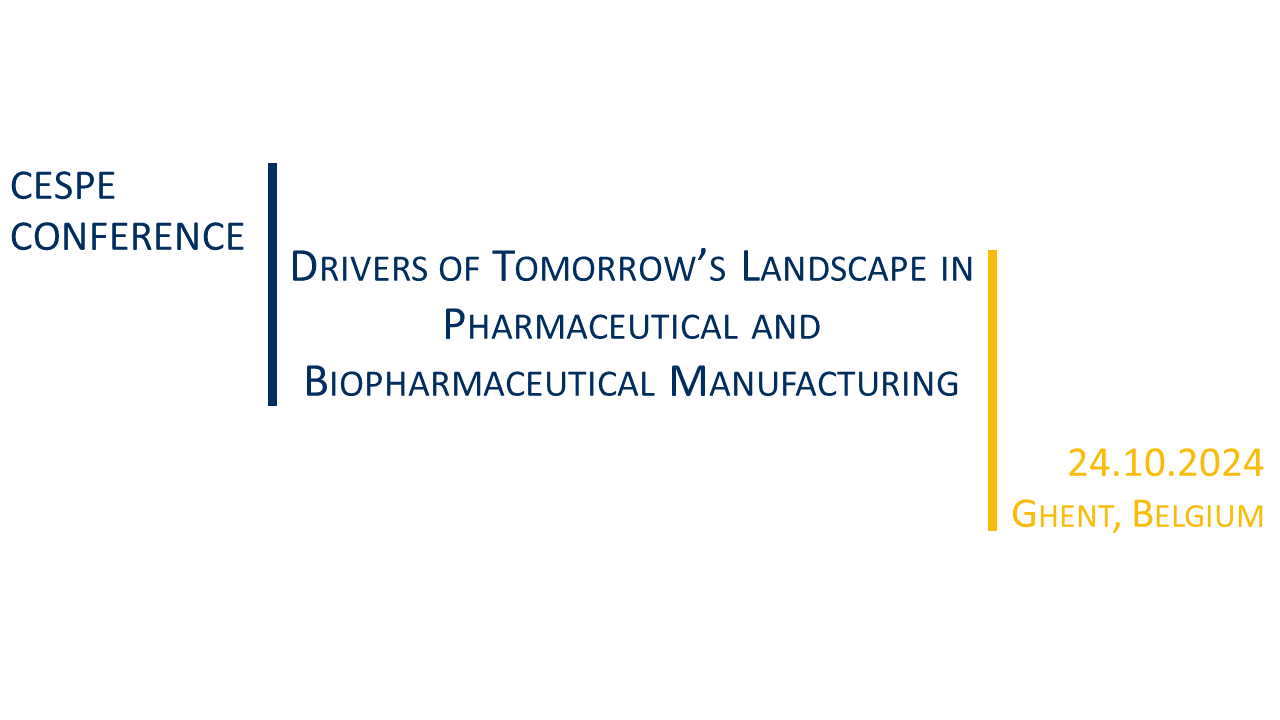
    The Drivers of Tomorrow’s Landscape in Pharmaceutical and Biopharmaceutical Manufacturing

    We are excited to announce the 3rd edition of our annual CESPE Conference on Thursday, October 24th!

    During this physical event in Ghent, researchers from industry and academia will present cutting-edge advances in their fields. Moreover, you will have the opportunity to network with our academic members, industrial partners, and policymakers.

    Join us for insightful sessions featuring lectures by representatives from academia and industry on four key themes:

    • Digitalization: Exploring big data, modeling, AI, and beyond.
    • Enabling (formulation) Technologies and Platforms.
    • Sustainability: Advancing sustainable practices in the industry.
    • Biomanufacturing, including a roundtable discussion on the current state, strengths, and needs of this ecosystem in Belgium.

    Additionally, there will be ample networking opportunities with more than 150 participants from over 50 institutes during breaks and a reception with an optional dinner.

    🗓️ Date: Thursday, October 24th
    📍 Location: RodeBol Events, Sint-Denijslaan 485, Gent

    Registration: through our Congrezzo platform: https://ugent.congrezzo.nl/cespe-conference-2024

    To get a glimpse of what to expect, check out the aftermovie from last year’s conference below and see the highlights of the insightful sessions, keynote speakers, and vibrant networking moments.

    We sincerely thank PwC Belgium for their generous sponsorship!

    We

    Categories
    Industrial members

    UCB

    Field of Expertise:
    Neurology, Immunology

    Field of Expertise:
    Neurology, Immunology

    UCB’s ambition is to transform the lives of people living with severe diseases, allowing them to live the best life that they can – as free as possible from the challenges and uncertainty of disease. That commitment comes to life in our research and development activities across neurology, immunology and other areas where our expertise, innovation and ambition align with unmet needs.

    UCB is continuously working to advance science and embrace new knowledge, bringing passion and leadership to solving the challenges that matter to people living with severe diseases. We are leveraging scientific advances and new technologies in areas including genetics, biomarkers and human biology. Continually inspired by those we serve to bring differentiated solutions with unique outcomes that deliver tangible, positive impacts.

    With more than 8700 employees in approximately 40 countries, they are a global biopharmaceutical company headquartered in Brussels, Belgium which invests more than 25% of revenue in cutting-edge scientific research to meet unmet patient needs.

    OTHER INDUSTRIAL MEMBERS

    Categories
    News

    Official Opening HighTru HTE Centre

    We at CESPE were thrilled to attend the official opening of the HighTru Lab. This innovative facility marks a significant milestone as Belgium’s first academic lab capable of high-throughput experimentation (HTE), accelerating chemical and pharmaceutical discoveries.

    HTE technology enables the simultaneous conduction and rapid analysis of numerous experiments, for example, by using 96-well plates. By leveraging miniaturization, automation, and advanced data management systems, HTE can efficiently screen vast amounts of chemical space. This approach facilitates the discovery of optimal conditions or novel reactions.

    The state-of-the-art equipment of HighTru includes solid and liquid handling robots, a robotic reaction platform with integrated solid and liquid handling, several reaction platforms for high-pressure, photo-, and electrochemistry, a high-throughput UPLC-MS, and a software platform for HTE design, execution, and data analysis. This equipment operates under an open-access model, facilitating collaboration between industry and academia. This remarkable partnership, involving Ghent University, Johnson & Johnson, and the City of Ghent, with funding from the EU Recovery and Resilience Facility, will accelerate research and strengthen Ghent’s reputation as a hub for cutting-edge science.

    Categories
    News

    Secoya CRYSTA’DAYS

    Join our Industrial Member Secoya at a two-day crystallization event!

    During this event, you’ll have the exclusive opportunity to discover Secoya’s continuous crystallization technology, explore their latest technological breakthroughs, meet their experts, dive into research and industrial case studies and network with fellow enthusiasts.

    Last but not least, Secoya will seize the opportunity to showcase the whole new SCT family, from lab to industrial unit.

    Categories
    Picture Gallery

    Picture Gallery

    Categories
    News

    Pfizer and Ghent University’s Innovation Cluster CESPE join hands to improve and innovate Pharmaceutical Manufacturing

    Ghent (October 5th, 2023) – It is with great pleasure that Pfizer Puurs and Ghent University (UGent) announce that Pfizer has officially joined the CESPE innovation cluster, a multi-partner innovation accelerator in the field of pharmaceutical engineering and manufacturing.

    We are proud of our footprint in Belgium and our worldwide impact, and happy to expand it further through this collaboration with CESPE at Ghent University.
    As we continue to innovate and improve our manufacturing processes and expertise, it is critical that we collaborate with the best and brightest, and we are confident the team at CESPE has the right expertise to make this partnership a great match.

    Gudrun Coppens, Director Manufacturing Science & Technology at Pfizer Puurs

    The close collaboration between industry and academia in this strategic partnership, combined with their drive to innovate, will play a key role in future pharmaceutical manufacturing.

    We are thrilled to welcome Pfizer Puurs to our fast-growing CESPE community of leading innovators in (bio)pharmaceutical manufacturing. We are excited to embark on this inspiring collaborative journey with Pfizer Puurs . This partnership also plays a pivotal role in nurturing local talent and fostering a culture of continuous innovation reflecting the spirit of the thriving Belgian pharma/biotech ecosystem, and particularly the flourishing region of Flanders .

    Dr. Dominic De Groote, Business Development Manager at CESPE
    Copyright Pfizer

    About Pfizer Puurs

    Pfizer Manufacturing Belgium is the largest production and packaging site of Pfizer worldwide, specializing in aseptic production and packaging. The Pfizer Puurs facility covers 100.000m², and manufactures more than 400 million units of injectable medicines and vaccines every year (excl. Comirnaty). The product physiology ranges from sterile solutions, to sterile suspensions, sterile gels, and freeze dry products, all packed on site in ampoules, vials, plastic bottles, syringes, or cartridges for pens. The medicines and vaccines made in Puurs are shipped to patients in more than 170 markets. 30% of Puurs production is destined for low income countries, in collaboration with UNICEF, WHO, GAVI, and NGOs.

    The site has an extensive manufacturing setup with a range of formulation booths, filling lines, automatic inspection lines, packaging lines, freeze driers, and lab facilities. With their clinical pilot plant and experimental plant the Pfizer Puurs is also known as a Launch Site within the Global Pfizer network, providing them the ability to quickly scale-up to commercial manufacturing of a new product.
    The last 10 years the number of employees in Puurs has more than doubled, bringing the total number of employees to more than 4.500 in 2023.

    For more information, visit https://www.pfizer.be.

    About UGent-CESPE

    Ghent University (UGent) is a top 100 university and one of the largest Belgian universities in the heart of Europe. It is an active partner in national and international educational, scientific and industrial cooperation. The organization is committed to research and innovation with an annual research budget of more than € 600 million and more than 5,500 researchers active in a wide range of the life, physical and social sciences. UGent TechTransfer and the UGent Business Development Platforms, such as CESPE, support researchers in developing groundbreaking science to bring innovations to the market.

    The Centre of Excellence in Sustainable Pharmaceutical Engineering and Manufacturing (CESPE) is a multidisciplinary innovation accelerator hosted at Ghent University focusing on the sustainable development, design and optimization of both drug substance and drug product production platforms. Its ambition is to become the reference centre in end-to-end (bio)pharmaceutical manufacturing in Europe. It accelerates the development of emerging production technologies to manufacture the medicines of the future in a sustainable, agile way.

    For more information, visit https://www.cespe.be.

    Media contact:

    Pfizer

    Koen Colpaert, spokesperson Pfizer Manufacturing Belgium
    Tel.: +32 499 42 85 56

    CESPE

    Thomas De Beer, director and principal investigator
    Tel: +32 9 264 80 97

    Categories
    Conference 2023 Past events

    Aftermovie CESPE Conference 2023

    On Thursday September 21st 2023 we held another succesful event on the Challenges & Solutions for transitioning to sustainable (bio)pharmaceutical manufacturing.

    More than 120 attendees coming from over 40 different companies joined us and the amazing line-up of speakers. A full day of open discussions about sustainability and staying ahead of what’s next!

    Experience the atmosphere at our conference in this aftermovie!

    Categories
    Conference 2023

    Program

    Conference opening + Introductions

    09h00 – 09h30

    Registration & Welcome

    Networking breakfast
    Poster exhibition + booths

    09h30 – 09h40

    Conference opening

    Sofie Bracke, Deputy Mayor of Ghent, responsible for Economy, Port and Sports

    09h40 – 10h00

    Introduction to CESPE & Update building

    Prof. Thomas De Beer, CESPE Director
    Dr. Christoph Portier, CESPE General Manager


    PART 1:
    Perspective from the pharmaceutical and biopharmaceutical Industry

    – Goals – State-of-the-art – Bottlenecks –

    Delegates from the big pharmaceutical and biopharmaceutical companies will highlight their company’s perspective on the current goals, state-of-the-art and bottlenecks related to their big investments in the transition towards sustainable manufacturing.

    10h00 – 10h20

    Environmental sustainability in the Small Molecules Active Pharmaceutical Ingredient’s
    synthesis: from global policy into action.

    Bert Heirman, Program Manager Strategic Sustainability Initiatives – Small Molecules, Janssen Pharmaceutica Geel
    &
    Bie Lambert, Head of Operations for Janssen Pharmaceutica Geel, Janssen Pharmaceutica Geel

    10h20 – 10h40

    Journey to a net-zero plasma derived manufacturing facility

    Simon Gilleman, Sustainability Manager, Takeda

    10h40 – 11h00

    Coffee break

    Poster exhibition + booths

    11h00 – 11h20

    (Preliminary) Sustainability in the Biomanufacturing Industry:
    Global ambitions – Role of the big pharma – No-brainers – Struggles

    David Vertongen, Sr. Technical Design Lead, Pfizer

    11h20 – 11h40

    Sustainability during Drug Product Manufacturing Development.

    Jan-Sebastiaan Uyttersprot, PAT Principal Scientist, UCB Pharma


    PART 2:
    Contributions from Academic & Industrial stakeholders

    – Chemical manufacturing – Biotech manufacturing – Drug Product Manufacturing –

    Three consecutive sessions will be held where both academic and industrial stakeholders will showcase how their innovative approaches could play a crucial role in the sustainability advancements in different areas within pharmaceutical and biopharmaceutical manufacturing.

    Session 1 – Chemical manufacturing

    11h40 – 11h55

    Digital technologies reducing the footprint in Pharma, examples from the Industry

    Dirk Wollaert, Manager Business Development Pharma USA, Siemens Digital Industries

    11h55 – 12h10

    Transitioning to a more sustainable API development

    Prof. Chris Stevens, Principal Investigator, CESPE

    12h10 – 12h25

    Towards a better process understanding and intensification by modeling

    Prof. Joris Thybaut, Principal Investigator, CESPE

    12h25 – 13h55

    Networking lunch

    Poster exhibition + booths


    Session 2 – Biotech manufacturing

    13h55 – 14h10

    How Sustainability Meets Efficiency in Freeze-Drying

    Mathieu Massart, Engineering Manager, RheaVita

    14h10 – 14h25

    Data, Artificial Intelligence & Analytics for Sustainable (Bio)Pharmaceutical Manufacturing.

    Noah Nzuki, ESG Lead EMEA, Cognizant

    14h25 – 14h40

    Pharmaceutical Freeze-Drying: Innovations for a Smaller Ecological Footprint

    Carolin Reinke, Senior Innovation Manager Pharma & Healthcare, GEA


    Session 3 – Drug Product manufacturing

    14h40 – 14h55

    SUSTAIN: SUstainability STrAtegy ImplementatioN, from ESG to the working plant

    Christian Post, Senior Process Engineer, VTU

    14h55 – 15h10

    Use of microfluidics to revolutionize the production of pharmaceuticals

    Tim Dieryckx, CEO, Voxdale

    15h10 – 15h25

    The triple bottom line in healthcare: A holistic sustainability assessment for decision support

    Prof. Delphine De Smedt, Principal Investigator, CESPE

    15h25 – 15h45

    Coffee break

    Poster exhibition + booths


    PART 3:
    Staying ahead of what’s next

    – Roundtable discussion – Innovation Café –

    15h45 – 16h30

    Roundtable discussion

    Representatives from different key stakeholders groups will have an open discussion about the current challenges and innovations facilitating the transition towards sustainable pharmaceutical and biopharmaceutical manufacturing.
    Get inspired by the insights of these key opinion leaders from industry, academia and policy makers.

    Moderator

    Tineke Van Hooland, Founder and CEO, Epic 10

    Panel

    Talia Flanagan, Head of Product Design and Performance, UCB Pharma
    David Vertongen, Sr. Technical Design Lead, Pfizer
    Simon Gilleman, Sustainability Manager, Takeda
    Noah Nzuki, ESG Lead EMEA, Cognizant
    Delphine De Smedt, Principal Investigator, CESPE
    Isabelle Francois, Director Innovation, MEDVIA


    16h30 – 17h20

    Innovation Café

    The talented people within CESPE will have the chance to pitch their innovative research to a broader audience.
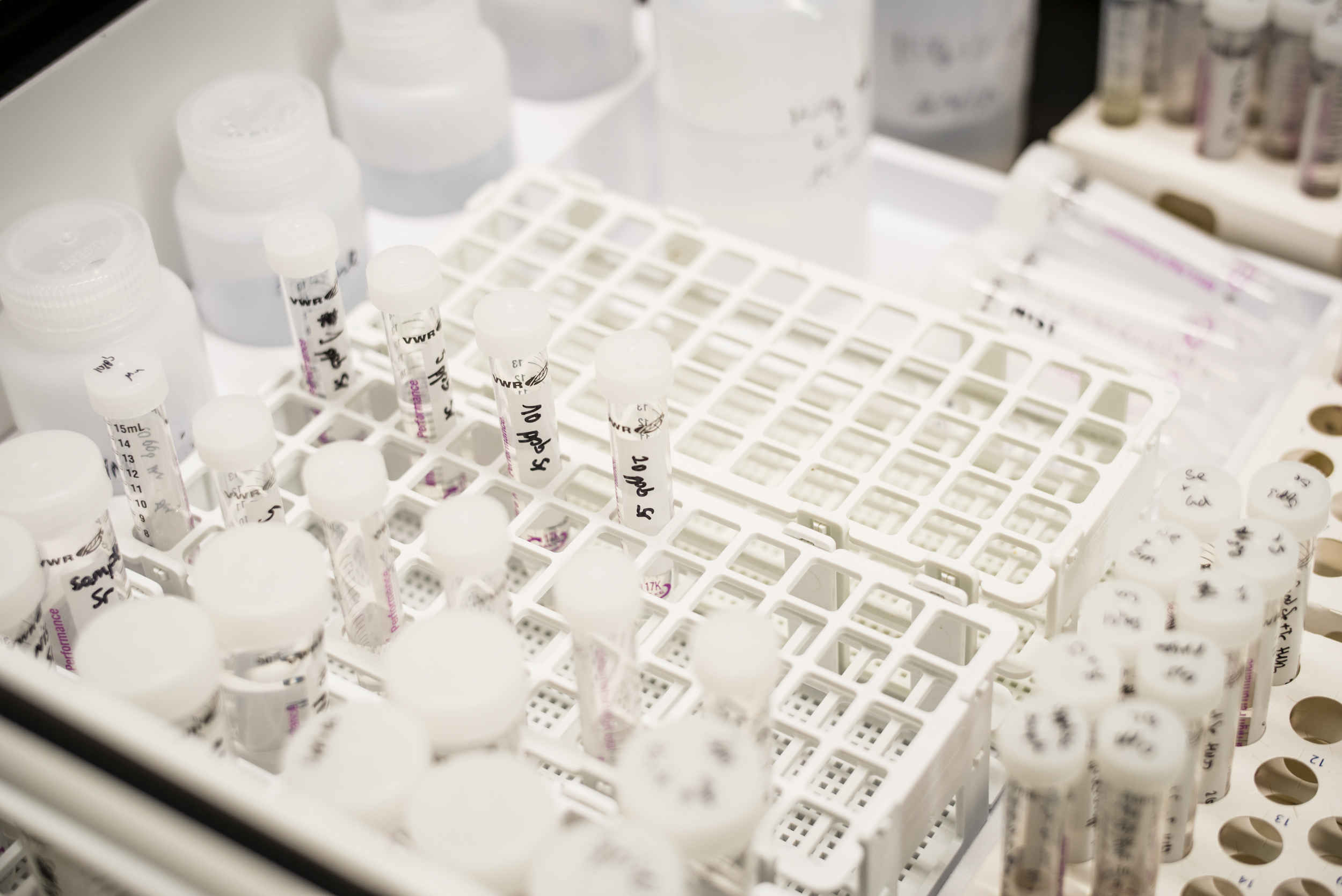
    Don’t miss this sneak-peek in the ongoing research within the different CESPE groups and member companies!

    Take a look at the submitted abstracts for the Innovation Café.


    Closing

    17h20 – 17h30

    Closing word

    Prof. Dieter Deforce, Principal Investigator, CESPE

    Networking Reception & Dinner

    17h30 – …

    Poster exhibition + booths

    Categories
    Uncategorized

    Material characterization

    COURSE OVERVIEW

    This course gives an introduction on the (pharmaceutical) relevance of (raw) material characterization. An overview is given about the relevant characterization methods on the market, their applicability and how the material properties can be used to describe the processability.
    This 1-day course consists out of a theoretical (interactive) and hands-on part.


    MODULE 1: BASIC COURSE

    Theoretical

    The trainee will get an in-depth explanation about the different characterization methods, their (pharmaceutical) relevance and what you can do with the generated data.
    Some of the key material characteristics described are:

    Flow/cohesion
    &
    Particle size and shape
    &
    Density and porosity
    &
    Electrostatic charge
    &
    Melting point and crystal structure
    &
    Viscosity

    Practical

    Hands-on sessions will allow the trainee to get a feel with what it takes to characterize a material.
    The extensive array of characterization equipments, available at CESPE, will be made available to visualize the difference between highly divergent powders.
    Some of the equipment that will be used are:

    FT4 Powder Rheometer
    &
    Schulze Ring Shear Tester
    &
    GranutoolsTM equipment
    &
    Malvern Laser diffractors
    &
    DVS and DSC equipment

    Upon request, a powder of interest could be tested on the available equipment!
    For more information, please contact Sarah.Costers@UGent.be .


    COURSE PROGRAMME

    A detailed overview of the course can be found in the following document.


    If you are interested in taking this course, please email Mark (mark.gontsarik@ugent.be).

    Categories
    CESPE Academy Courses

    Process Analytical Technologies

    COURSE OVERVIEW

    This course focusses on giving a basic introduction about the implementation of PAT tools in the (bio)pharmaceutical industry.
    This course is given in an interactive manner (both theoretical and hands-on) and can be divided into two separate modules:

    Module 1: Basic course: Introduction to PAT (1-day module)
    &
    Module 2: Basic data-analysis and modeling (1.5-day module)

    Requirements
    Basic understanding of spectroscopy and (bio)pharmaceutical processes
    &
    Basic understanding of coding and programming (python)


    MODULE 1: BASIC COURSE: INTRODUCTION TO PAT

    Theoretical

    The trainee will get a general introduction to PAT and the common (non-)spectroscopic sensors, learning how, when and where these tools can provide a benefit.

    Spectroscopic sensors
    &
    Non-spectroscopic sensors (Univariate/Multivariate)
    &
    Hyperspectral imaging
    &
    PAT in R&D/Process Validation/QbD
    &
    Regulatory aspects
    &
    Multivariate data-analysis

    Practical

    The trainee will get the chance to see how PAT tools can be used/implemented and how this translates in a practical approach to acquire relevant process information.
    Some of the tools that will be demonstrated are:

    NIR
    &
    Raman
    &
    FLIR

    MODULE 2: BASIC DATA-ANALYSIS AND MODELING

    Theory through practice

    Using spectroscopic data, the teacher will go through different aspects of PAT and model development together with the attendee.

    General introduction to Python
    &
    Data preparation and exploration
    &
    Introduction to modeling
    &
    Process control based on PAT


    COURSE PROGRAMME

    A detailed overview of the different modules can be found in the following document.


    If you are interested in taking this course, please email Mark (mark.gontsarik@ugent.be).

    Categories
    News

    Master of Science in Pharmaceutical Engineering (MPE) is accepting applications!

    Ghent University is now accepting applications for our Master of Science in Pharmaceutical Engineering (MPE) program. Our program offers a unique combined training of pharmaceutical and engineering skills. Both skills are required to develop these pharmaceutical production processes for tomorrow’s drug products and supply needs.
    The MPE consists of a two-year English-taught programme of 120 credits and will help you acquire all skills and knowledge that you need to implement novel manufacturing concepts that require a high degree of digitalization and automation. The MPE will also increase your opportunities to get a good position in the pharmaceutical industry or to become an excellent PhD candidate!

    For further information, please take a look at the MPE site: https://lnkd.in/gXFbn42H.

    Categories
    Conference 2023 Past events

    CESPE Conference 2023

    Challenges & Solutions for transitioning to sustainable (bio)pharmaceutical manufacturing

    CESPE is pleased to announce the second edition of the annual CESPE Conference on Thursday September 21, 2023.

    Through insights from different stakeholders, this event aims to address and tackle the current challenges related to the transition into a more sustainable (bio)pharmaceutical industry.

    • What are the goals for the industry and which initiatives are being taken by the (bio)pharmaceutical companies?
    • Where are the current bottlenecks limiting innovation and how can we solve them?
    • Which tools are required to achieve ambitious goals?
    • What is the role of both academic and industrial partners?

    The physical event in Ghent will provide you with many opportunities to network with our academic members, industrial partners and policy makers. Therefore, it is perfectly suited for senior scientists, industrial decision makers and policy makers active within the ecosystem.

    Check out the program below and stay tuned for further details!

    For further information on booths and sponsorships, feel free to contact Christoph Portier (Christoph.Portier@UGent.be) or Bram Bekaert (Bram.Bekaert@UGent.be).

    Categories
    News

    Professor Dieter Deforce and CESPE join hands

    It is with great honour that we can announce professor Dieter Deforce as a new academic member of CESPE. His expertise in the fields of pharmaceutical biotechnology and (forensic) DNA-analysis are a crucial addition to the CESPE portfolio.

    Dieter Deforce is a professor at the University of Ghent and is the head of the Laboratory of Pharmaceutical Biotechnology at the Faculty of Pharmaceutical Sciences. From 2001 till 2016 he was also head of the forensic DNA‐analysis laboratory, which he founded at the University of Ghent, accredited and recognized by the Belgian government. He remains in the forensic field as dedicated DNA expert.

    He is chair of the Belgian Medicines Committee, member of the Scientific Advise Working Party of the European Medicines Agency. He is also the director of the ProGenTomics platform of the University of Ghent, providing amongst others proteomics and mainly mass spectrometry based protein analytical tools to the research community. He is a partner in NXT‐GNT, a research consortium providing the research community next generation DNA‐sequencing. He is member of the board of directors of the VIB.

    His research focuses on applying proteomics and genomics platforms (including Next Generation Sequencing) in the field of post translational protein modifications, stem cell development, prenatal genetic diagnosis, (auto‐)immunity and forensics and he is (co‐)author of over 350 scientific papers.

    Categories
    Industrial members

    272BIO

    Field of Expertise:
    VHH based therapeutic and prophylactic drug development; Designing and driving discovery and development phases

    Field of Expertise:
    VHH based therapeutic and prophylactic drug development; Designing and driving discovery and development phases

    Antibody drugs are now widely accepted in companion animal health. 272BIO is developing a pipeline of VHH based therapeutic and prophylactic drug to address complex diseases at affordable prices for both developers and customers. The flexibility and modularity of VHH, combined with their suitability to be produced across many different microbial expression systems make them highly suitable for the development of bi- and multi-valent drugs targeting different pathophysiological pathways. 

    272BIO is making use of the advantages of VHH to develop innovative second-generation treatments for complex diseases including canine atopic dermatitis, osteoarthritis, oncology etc.

    A key goal for 272BIO is to develop VHH antibody drugs to transform the lives of patients by addressing the different drivers of disease to result in superior clinical efficacy and better disease control.  Development costs, modest market sizes and high drug prices represent barriers to entry for animal health companies, prescribers and pet-parents as well. To overcome these hurdles necessitates the use of expression and manufacturing processes suitable for the challenges of animal health

    The experienced team of seasoned antibody scientists can also assist start up biotech and animal health companies in designing and driving their discovery and development phases for their products.

    OTHER INDUSTRIAL MEMBERS

    Categories
    Industrial members

    AM-Team

    Field of Expertise:
    Advanced modelling services for process optimisation and design

    Field of Expertise:
    Advanced modelling services for process optimisation and design

    AM-Team was founded in 2017 by Dr. Wim AudenaertDr. Usman Rehman, and Prof. Ingmar Nopens, all having MSc and PhD degrees in either chemical or environmental engineering. AM-Team is a spinoff company of Ghent University with over a decade of expertise in process modelling and simulations.

    Customers from all over the globe rely on their leading-edge simulation services and digital tools. They keep on developing tailored digital solutions to match the needs of their customers in the process industry.

    They do this by: 

    • Developing new process models and methodologies to maximise customer experience and cater the industry needs
    • Sharing their expertise at high-level international events and publishing new findings in peer-reviewed scientific papers, often together with customers
    • Investing in new hardware and software to maximise simulation speed and accuracy

    Thanks to their large team of dedicated simulation engineers, they can handle large projects in a short timeframe. 

    OTHER INDUSTRIAL MEMBERS

    Categories
    Industrial members

    BRS

    Field of Expertise:
    High-end laboratory instruments and services in the fields of Life Sciences, Chemistry and Analysis

    Field of Expertise:
    High-end laboratory instruments and services in the fields of Life Sciences, Chemistry and Analysis

    Through our divisions BioSPX (Life Sciences), ChemSPX (Organic Chemistry and Chromatography) and SciSPX (Sample Prep and Analysis) we help laboratories with their research and analysis.

    As experts in our fields we focus on establishing long-term relationship with our customers and partners.

    We make your innovation our goal!

    • BRS stands for the exclusive distribution of high-end laboratory solutions in Belgium and Luxemburg.
    • We introduce new technologies and innovations of existing systems.
    • We guarantee an optimal and continued operation of your laboratory at all times.
    • You can count on an optimal technical support by our service & support team.
    • BRS is committed to providing the highest level of sales, service & support to our customers.
    • At BRS the customer comes first.
    • Working together as a team and in close cooperation with our customers is the key.
    • We believe in an open communication.
    • The BRS team focuses on YOUR results.

    OTHER INDUSTRIAL MEMBERS

    Categories
    Industrial members

    Comate

    Field of Expertise:
    Engineering and Design of high-tech hardware

    Field of Expertise:
    Engineering and Design of high-tech hardware

    Every decision we take at Comate, is to make a hardware solution more successful. Our team of 90+ engineers and designers, will give a high-tech hardware idea the biggest chance on success. From tracking and monitoring solutions over precision mechanics to high end machinery and automation innovations. We focus on wide technical expertise in combination with user experience and designs that will reflect the quality of the product. Our success is measured by the quality of the products we deliver.

    OTHER INDUSTRIAL MEMBERS

    Categories
    Industrial members

    Elegent

    Field of Expertise:
    Bridging the gap between academic innovations and practical applications in pharmaceutical engineering

    Field of Expertise:
    Bridging the gap between academic innovations and practical applications in pharmaceutical engineering

    Elegent, a UGent spin-off company, is a dynamic modelling consultancy firm, dedicated to optimizing pharmaceutical development processes. Within the CESPE consortium, we bring invaluable expertise in data-driven and physics-based pharmaceutical engineering. Their focus is accelerating drug product production of solid oral dosages via continuous direct compression and wet granulation through advanced modelling techniques. With a commitment to sustainability and innovation, Elegent complements the consortium’s mission to revolutionize pharmaceutical manufacturing.

    The expertise at Elegent centres on bridging the gap between academic innovations and practical applications in pharmaceutical engineering. Within the CESPE consortium, their specialization is utilizing quantitative data-driven support for drug product development. They excel in custom process modelling, formulation, process development, and process analytical technology (PAT) implementation. By leveraging their extensive knowledge in pharmaceutical technology and data science, they help CESPE and its industrial partners drive sustainable innovation, enabling efficient pharmaceutical care delivery to patients.

    OTHER INDUSTRIAL MEMBERS